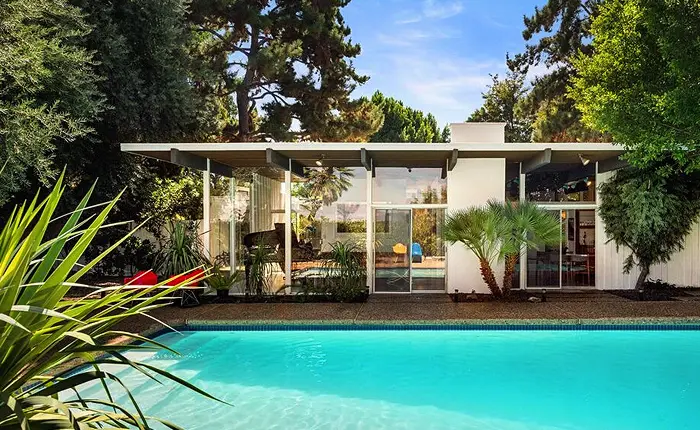
A. Quincy Jones
A. Quincy Jones and the Architecture of Optimistic Modern Living
Few architects left a more meaningful mark on postwar residential design than A. Quincy Jones. Known for his inventive site planning, efficient construction methods, and airy, human-centered homes, Jones became one of the defining voices of California modernism in the mid-twentieth century. His work focused on how families lived, moved, and connected within their homes, and he believed that modern design should promote community, affordability, and a sense of well-being.
Jones was not only an architect, but also a planner and collaborator who worked with developers, builders, and landscape architects to bring modernism to a broad audience. His partnership with the legendary developer Joseph Eichler produced some of the most celebrated mid-century neighborhoods in the country. These communities introduced everyday families to open floor plans, post-and-beam construction, walls of glass, and indoor-outdoor living, creating a new model for suburban life that still resonates today.
Designing Homes That Celebrate Light, Space, and Community
A. Quincy Jones believed that good design should be democratic. Many of his residential projects were modest in size, but rich in spatial clarity and thoughtful detail. He championed flexible living spaces, natural light, and strong visual connections to gardens and courtyards. His homes often featured central atriums, clerestory windows, and carefully planned circulation that created a sense of openness without sacrificing privacy.
In addition to his collaboration with Eichler, Jones designed numerous custom homes for artists, academics, and design-minded clients. These residences often experimented with structural innovation and site-specific solutions. Whether perched on a hillside or nestled in a suburban street grid, his designs reflected a deep respect for the landscape and a belief that architecture should enhance both community and individual comfort.
A Legacy Rooted in Innovation and Humanity
Jones was also a respected educator and later served as Dean of the School of Architecture and Urban Planning at UCLA. There, he encouraged the next generation of architects to merge creativity with responsible planning. His influence extended into civic design, workplace architecture, and large-scale community planning, but it is his residential work that remains most closely associated with his legacy.
Today, A. Quincy Jones is recognized as one of the great visionaries of mid-century modernism. His homes and neighborhoods are prized for their warmth, livability, and forward-thinking design. They represent an optimistic moment in American architecture when creativity, community, and modern ideals came together to shape a new way of living.
No properties by this architect currently.