Frank Lloyd Wright
Frank Lloyd Wright and the Birth of the Modern American Home
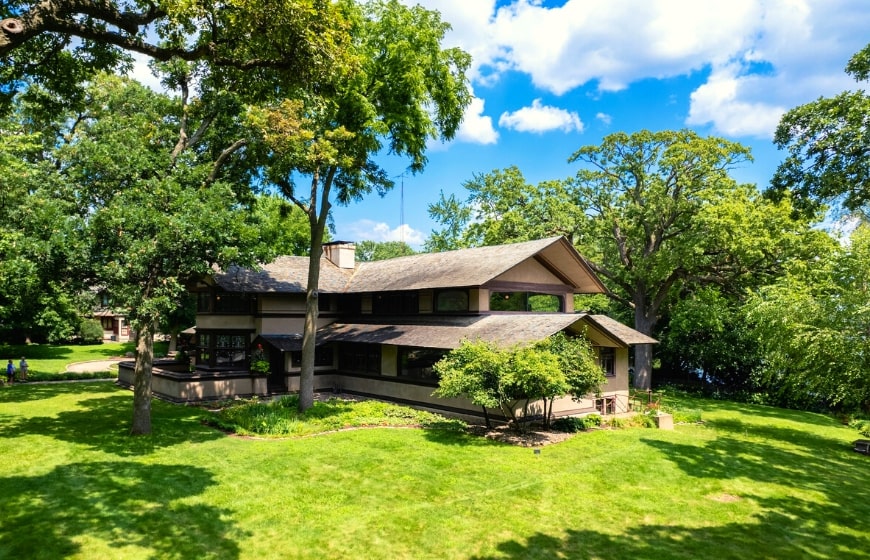
Few figures have had as lasting an impact on residential architecture as Frank Lloyd Wright. Over a career that spanned more than seven decades, Wright transformed how Americans thought about the home—its structure, its relationship to the landscape, and its role in modern life. He rejected the ornate historicism of the late 19th century and instead sought a new, distinctly American form of design rooted in simplicity, honesty, and connection to nature. His Prairie Houses of the early 1900s, with their low-pitched roofs, wide overhangs, and flowing open floor plans, broke from the traditional boxlike house and introduced the idea that architecture should respond to its environment rather than impose upon it.
Wright’s later work continued to evolve with his Usonian homes, an innovative series of modest, affordable houses designed during the 1930s and 1940s. These residences emphasized efficiency, natural materials, radiant-heated concrete floors, and a seamless transition between indoors and outdoors—principles that would become central to mid-century modern design. Wright’s philosophy of “organic architecture” celebrated harmony between people and their surroundings, influencing generations of architects who sought to create homes that felt both modern and humane. From Fallingwater to Taliesin, his ideas continue to inspire contemporary designers and homeowners who see the house not merely as shelter, but as an integrated work of art connected to the landscape it inhabits.
No properties by this architect currently.