
The Joss House: Eloquent Simplicity on a Portland Hillside
7035 NW Penridge Road, Portland, OR
In 1941, when the Joss family needed a house that could grow with their family on a hilltop lot near Forest Park, they turned to Pietro Belluschi who was already recognized as one of Portland's most innovative architects despite being just a dozen years into his career. What he gave them was something they would cherish for generations: a home that felt both settled into its landscape and open to it, combining Northwest materials with modernist clarity in ways that still feel fresh eight decades later.
The house stayed in the Joss family until 2000, a remarkable 59-year run of single-family ownership. That kind of continuity speaks to something Belluschi understood instinctively: homes should serve the people who live in them, adapting to changing needs while maintaining their essential character.
4
Bedrooms
2
Bathrooms
1941
Year Built
Pietro Belluschi
Developer
Northwest Contemporary
Style
Forest Park
Neighborhood
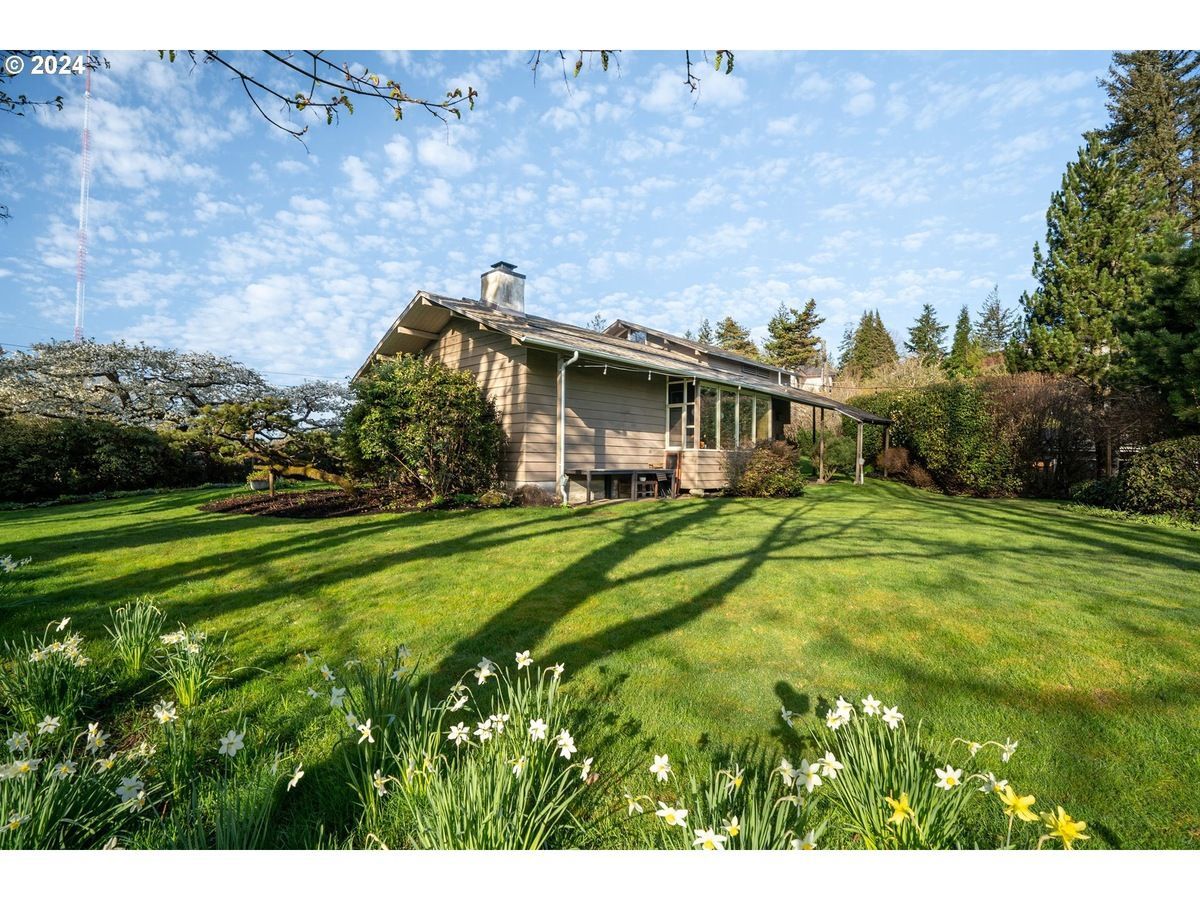
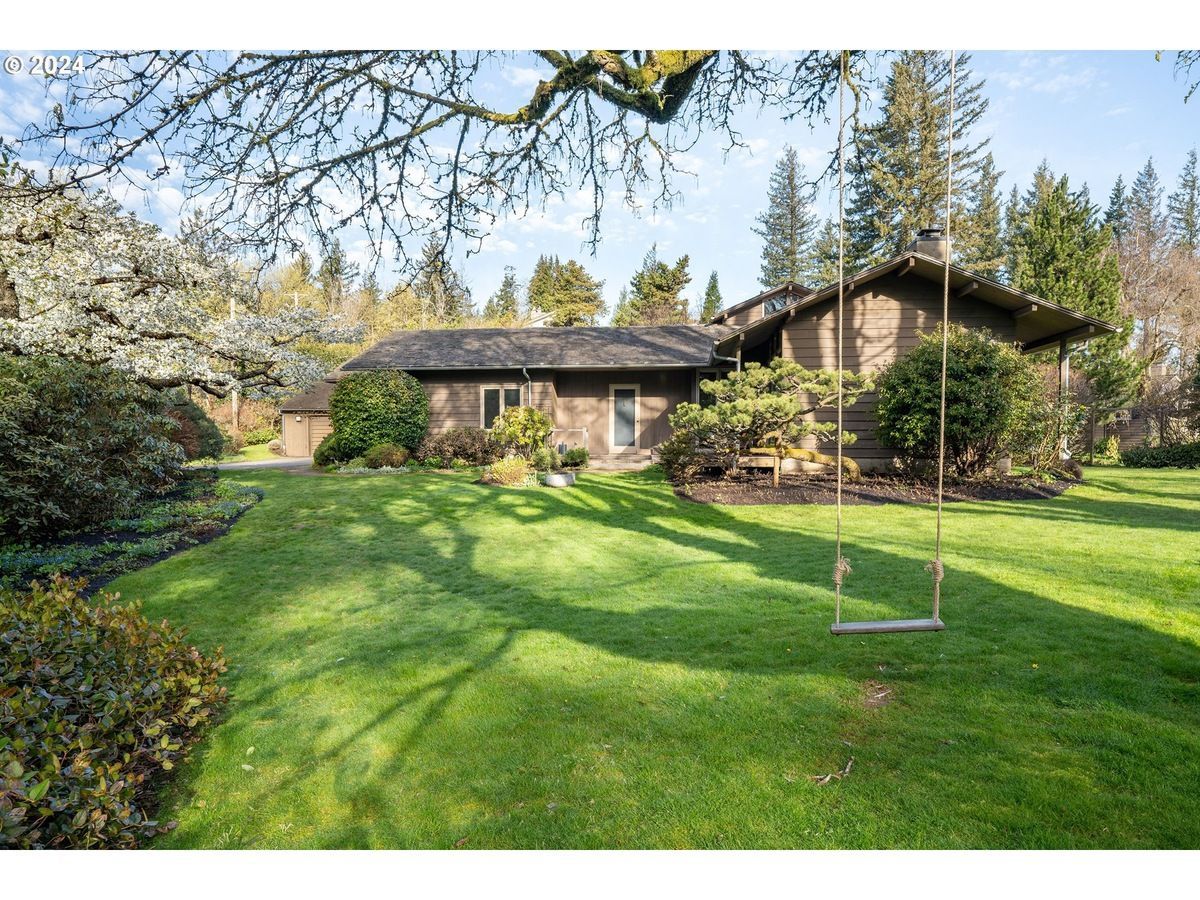
The phrase "eloquent simplicity" appears throughout descriptions of Belluschi's work, but at the Joss House you understand what it means in practice. The 2,429-square-foot L-shaped plan sits thoughtfully on 0.68 acres, oriented to capture views while creating sheltered outdoor spaces. Clear cedar walls throughout establish a warm, natural baseline that lets other elements like the floor-to-ceiling windows and the unique concrete gas fireplace make their statements without competing for attention.
That fireplace is worth focusing on. Surrounded by built-ins, it anchors the living room without dominating it. This is Belluschi's approach in miniature: take a functional element, give it honest expression in appropriate materials, integrate it with the architecture rather than applying it as decoration.
Credit for All Photos: Pablo Enriquez
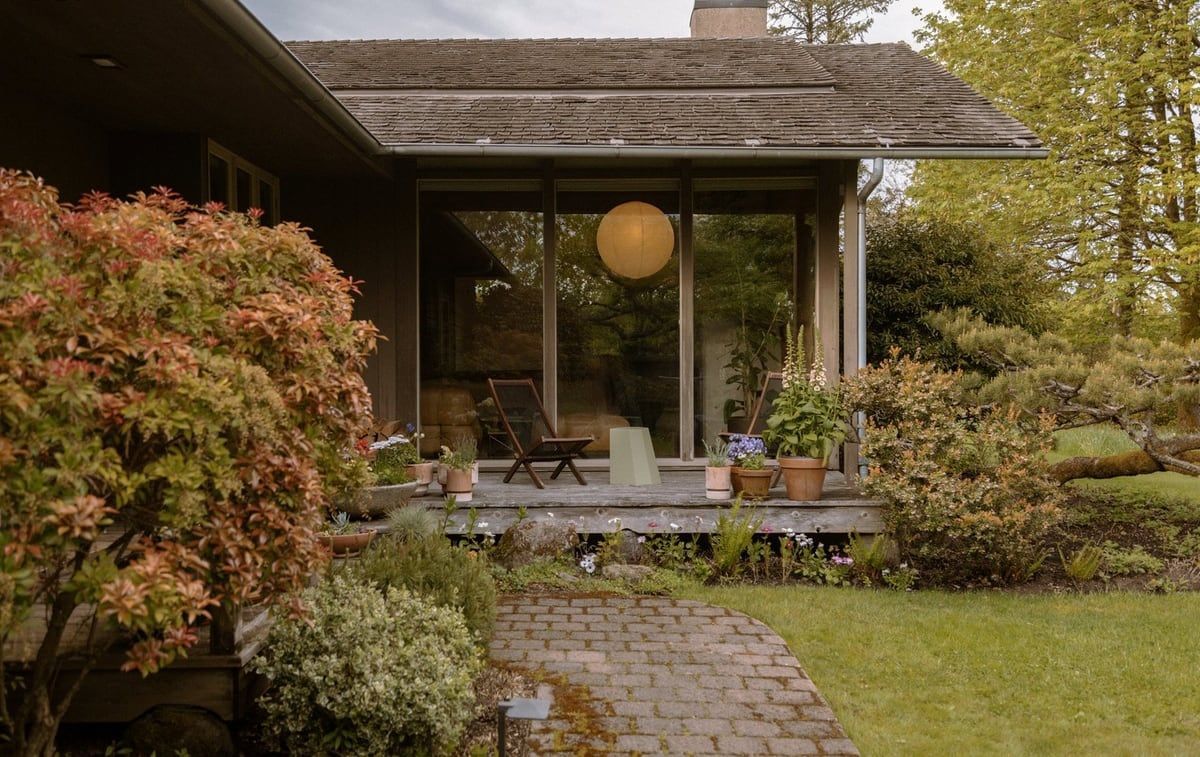
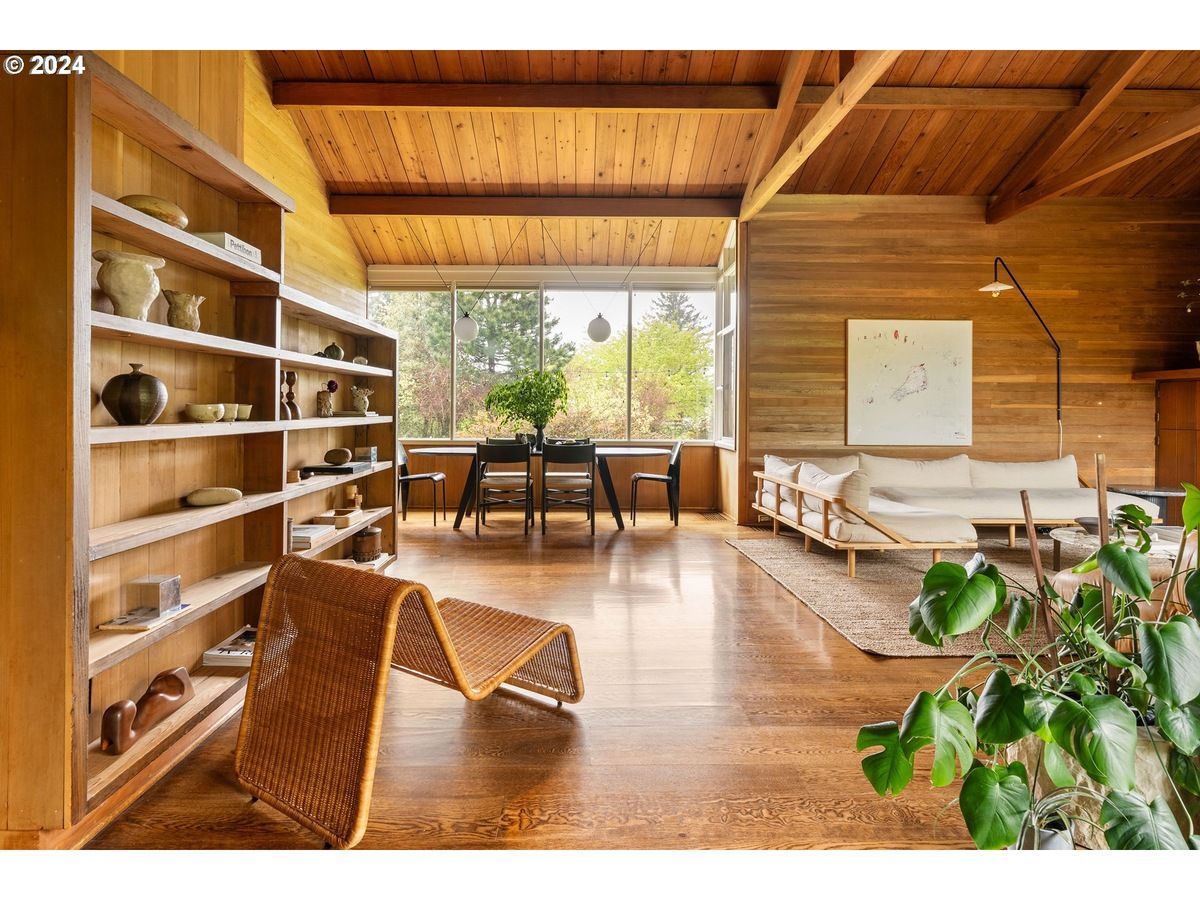
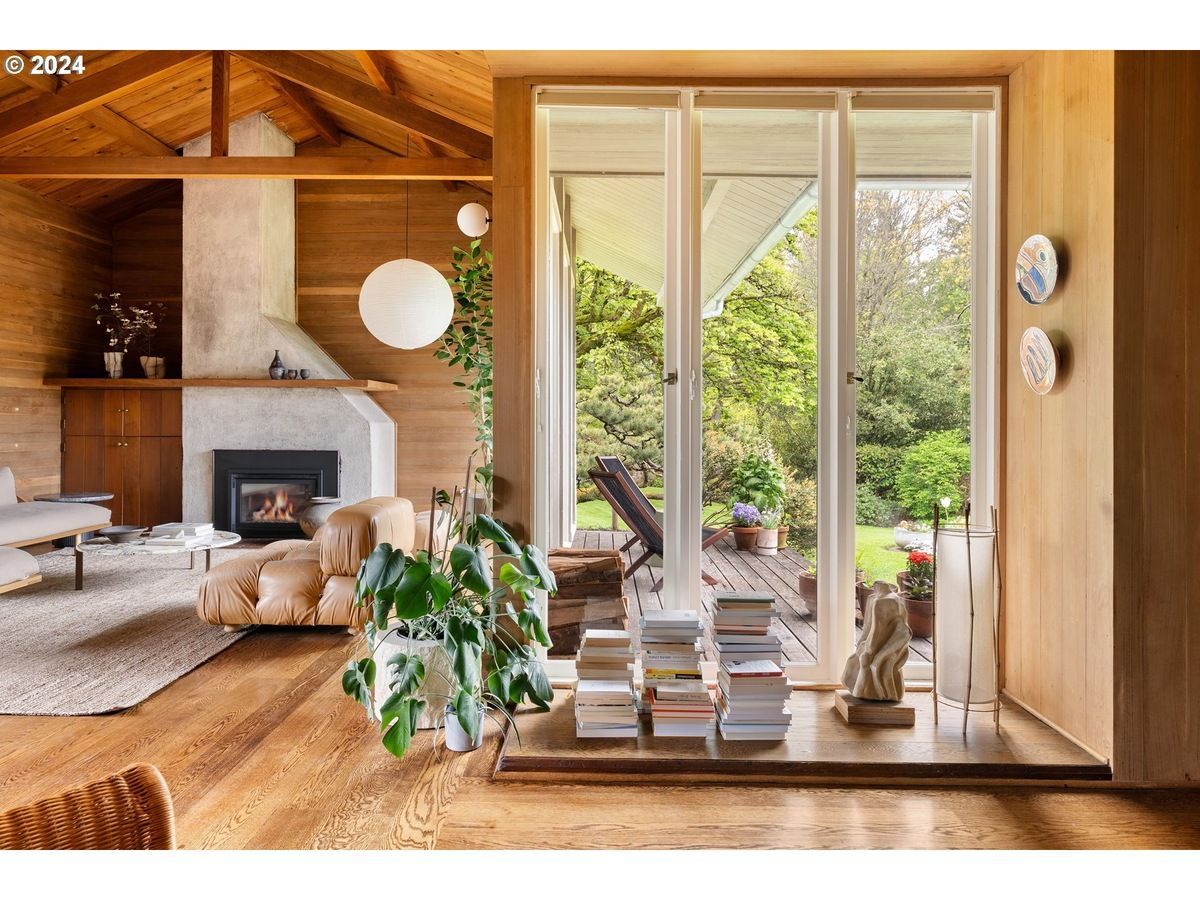
Walk through the Joss House and you're constantly aware of the landscape beyond the glass. The living room's vaulted ceiling draws your eye upward, but the floor-to-ceiling windows immediately pull your gaze back out to the surrounding trees. The adjacent dining space features a wall of windows overlooking what the current owners have lovingly maintained as a beautifully landscaped yard.
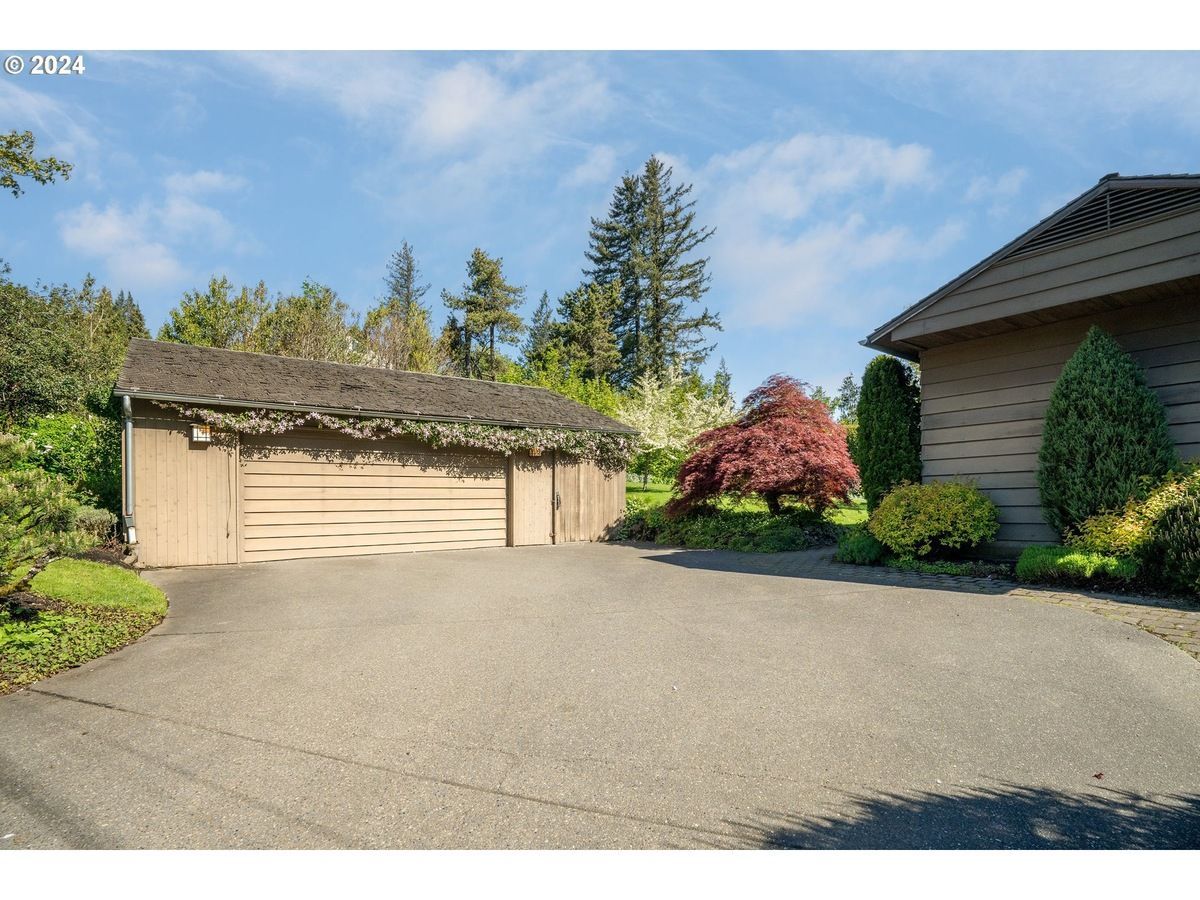
Majestic maples surrounded by fields of daffodils create seasonal moments. Think spring blooms visible from inside, summer shade filtering light through the generous windows, and fall color framed by those cedar walls. The 0.68-acre lot was clearly conceived as part of the house's program, not just leftover space around it.
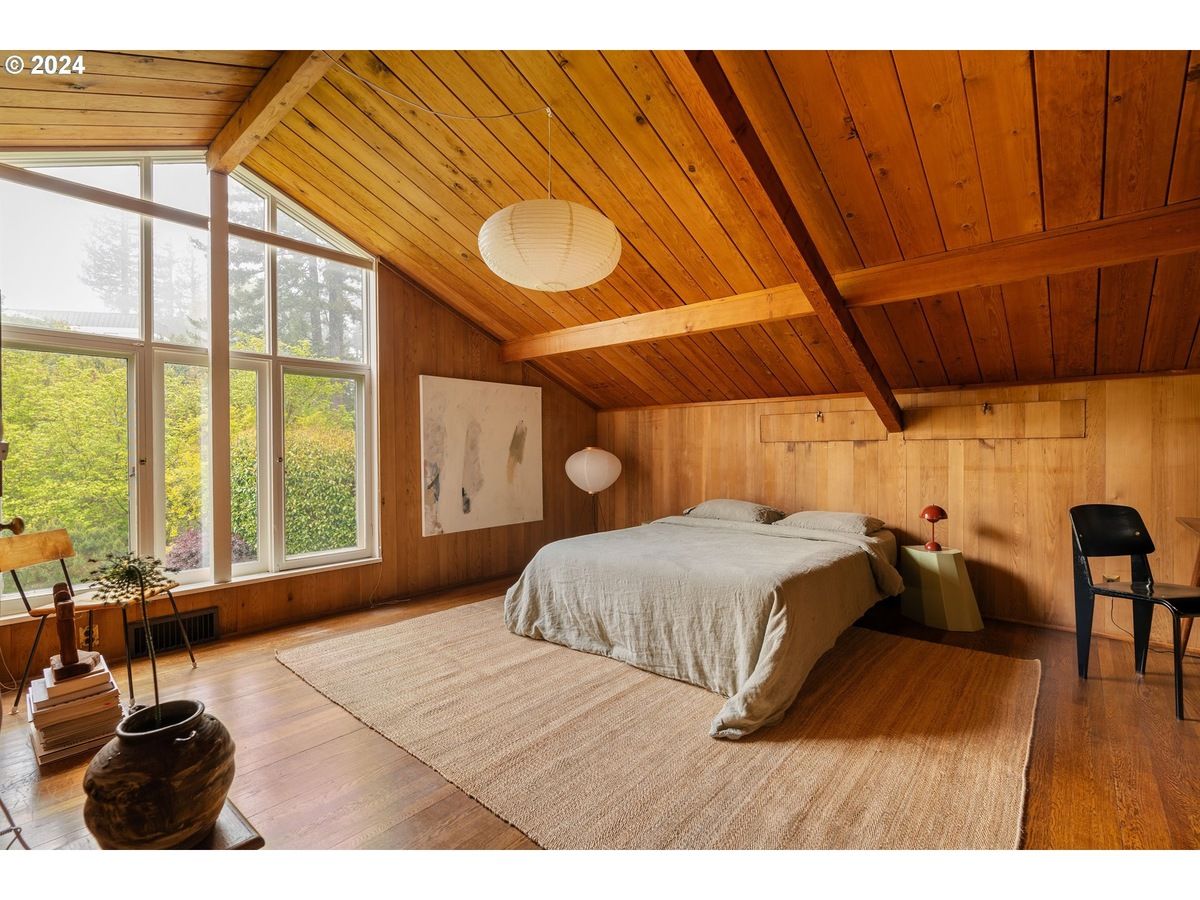
An upper-level bedroom suite maintains the vaulted wood ceiling treatment, and there are three additional bedrooms on the main level feature built-in details that maximize usability in compact spaces.
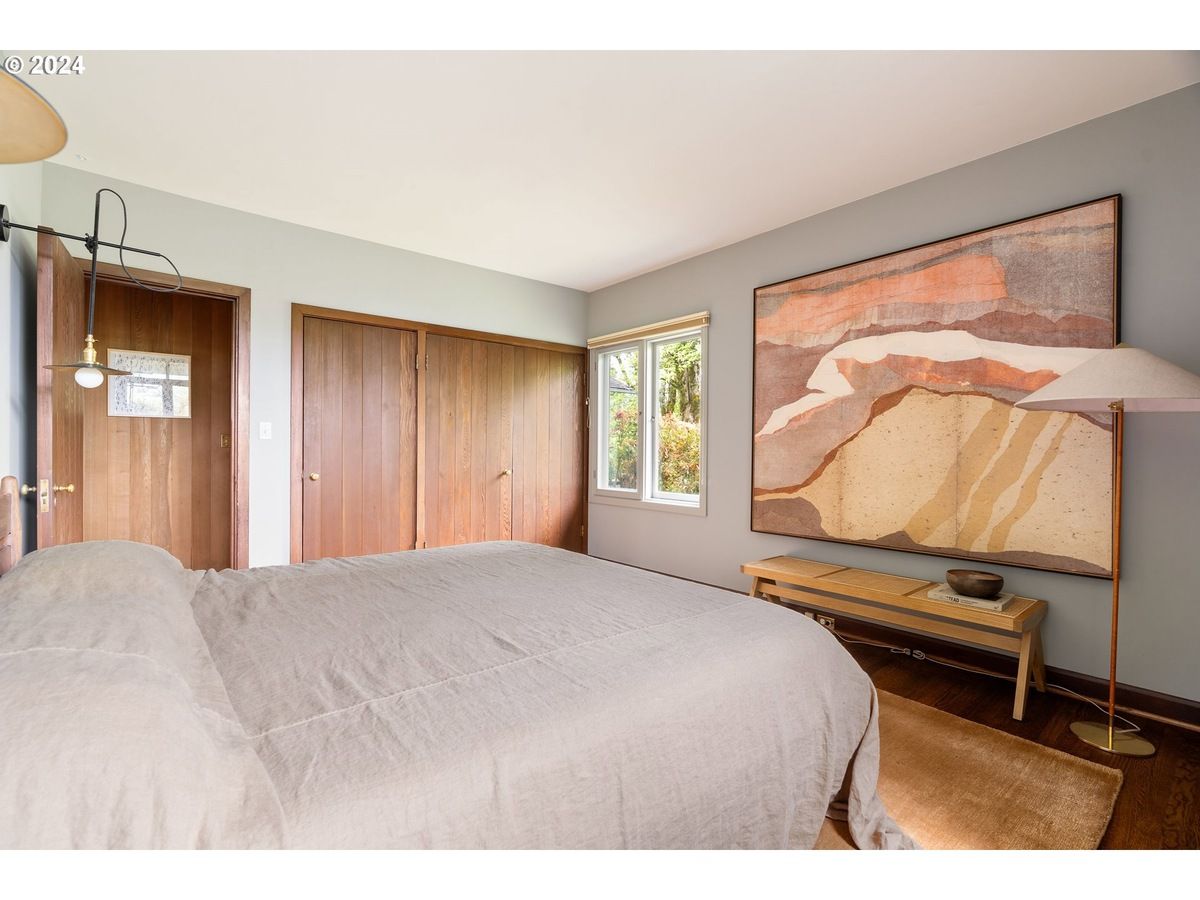
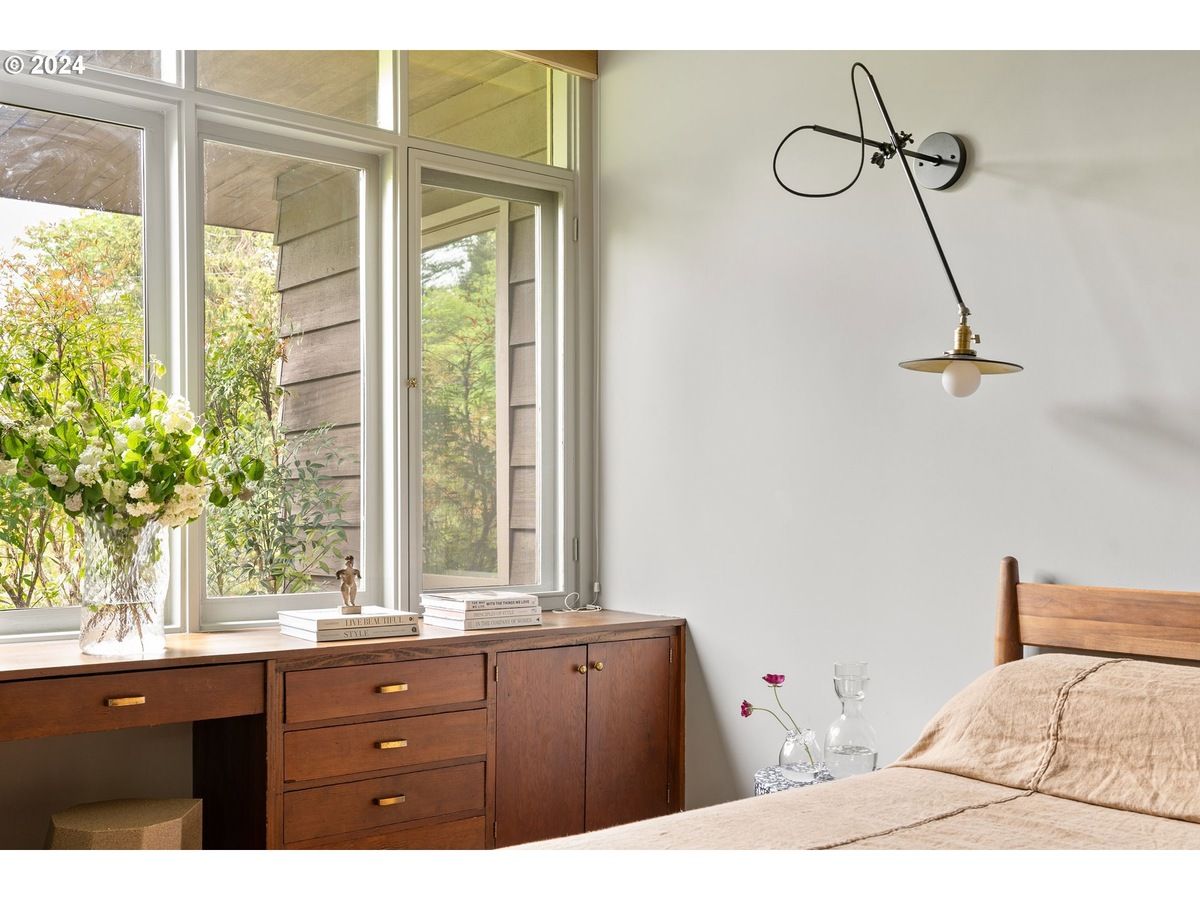
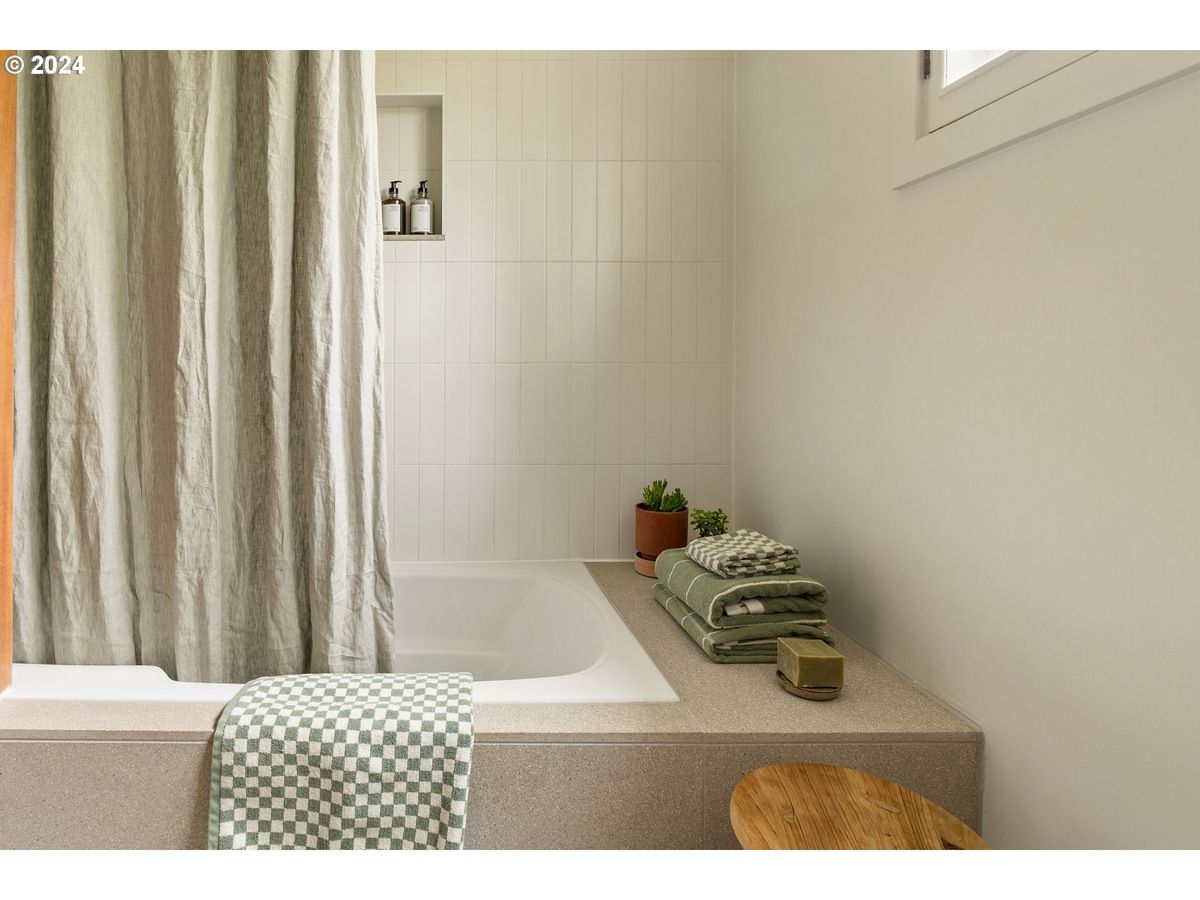
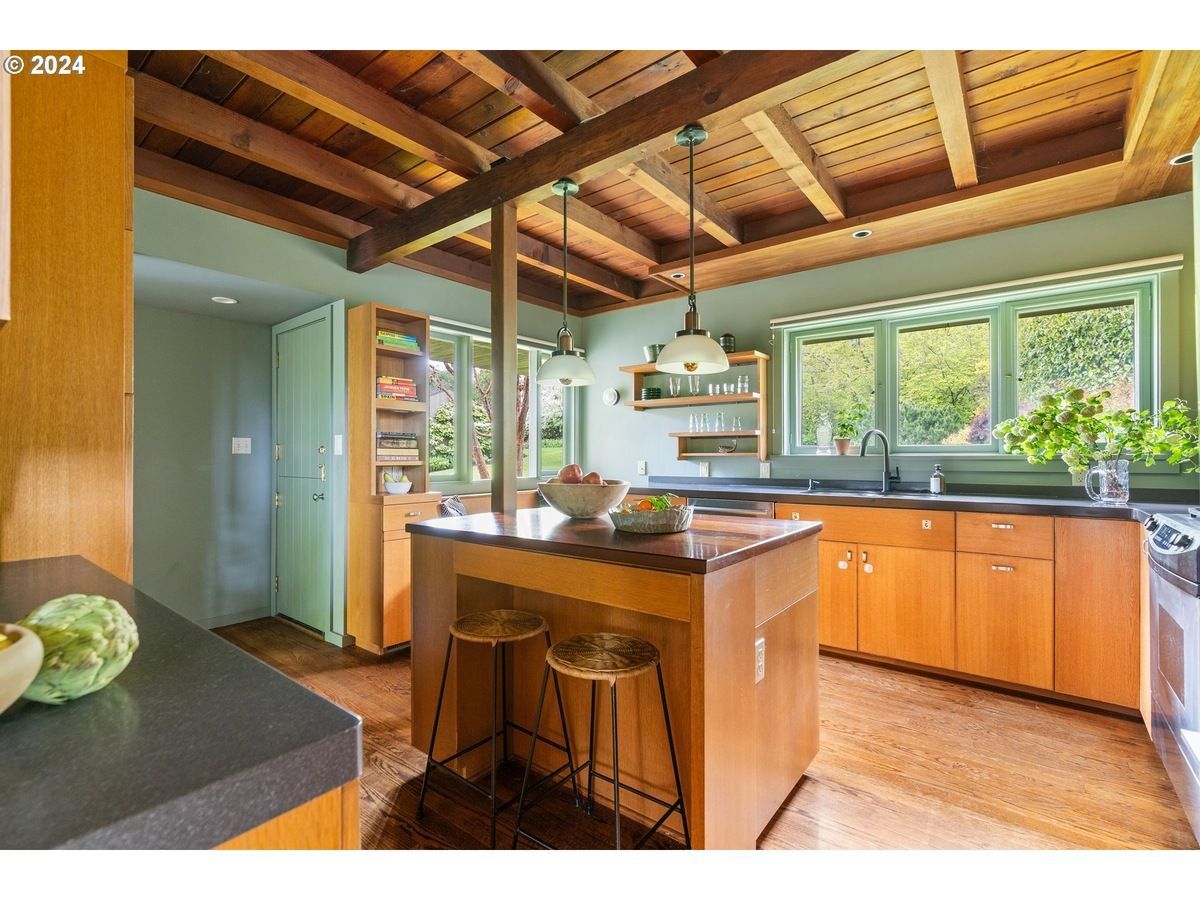
Recent owners recognized what they had and acted accordingly. Kitchen and bathroom updates by Hammer & Hand brought modern amenities without sacrificing the home's aesthetic integrity. The kitchen now features high-quality wood built-ins, casement windows, and a charming Dutch door that feels entirely appropriate to Belluschi's original vision.
Rare wide oak flooring and the clear cedar wall cladding that defines the house remain intact - hallmarks of Northwest Regional Style that Belluschi helped pioneer. These aren't precious museum pieces to tiptoe around; they're durable materials that have aged gracefully through eight decades of use. The sensitively updated bathrooms maintain the home's character while meeting contemporary expectations for comfort. Throughout, the renovations ask "what would Belluschi do?" rather than imposing foreign aesthetics or obliterating original details in pursuit of modern convenience.
Listed initially at $1,775,000 in May 2024 and ultimately selling for $1,585,000 in November, the house found new stewards who presumably understand what they've acquired: not just a house, but a piece of Portland's architectural history. A home where one of the 20th century's most important architects demonstrated how modern design could honor both international modernist principles and the specific character of the Pacific Northwest.
Eight decades after Belluschi designed it for the Joss family, the house continues doing what it was built to do: providing a tranquil oasis that feels like a country retreat while remaining connected to the city, bringing the outdoors inside and offering spaces that adapt to how people actually live rather than forcing occupants to adapt to architectural theory.
