
Pietro Belluschi
The Italian Immigrant Who Became Oregon's Greatest Architect
by Brian Enright
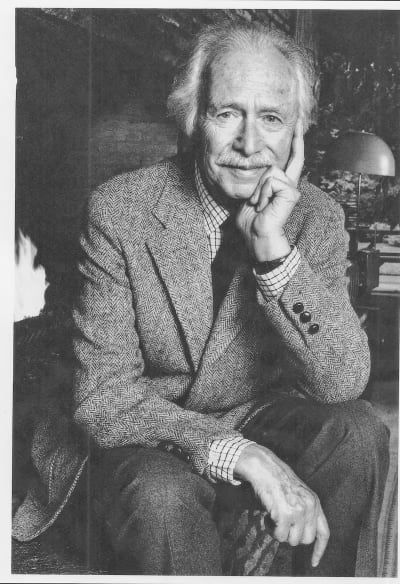
If you know anything about mid-century modern architecture in the Pacific Northwest, you've encountered Pietro Belluschi's influence whether you realize it or not. Born in Italy in 1899, he lived in Portland until his death in 1994 at age 94. In that time Belluschi spent seven decades shaping how we think about modern architecture - not just in Oregon, but across America.
What makes his story fascinating isn't just the buildings (though he designed over 1,000 of them). It's how an Italian immigrant who barely spoke English became the architect who essentially invented Northwest Regional Modernism, then went on to international acclaim while never losing his connection to Portland. This is a career arc that spans from designing houses in the Oregon woods to consulting on skyscrapers in Manhattan, all while maintaining a consistent design philosophy rooted in respect for materials, place, and people.
A Collection of Belluschi Homes
Whenever we find a Pietro Belluschi property for sale or profiled online we'll post about it here.
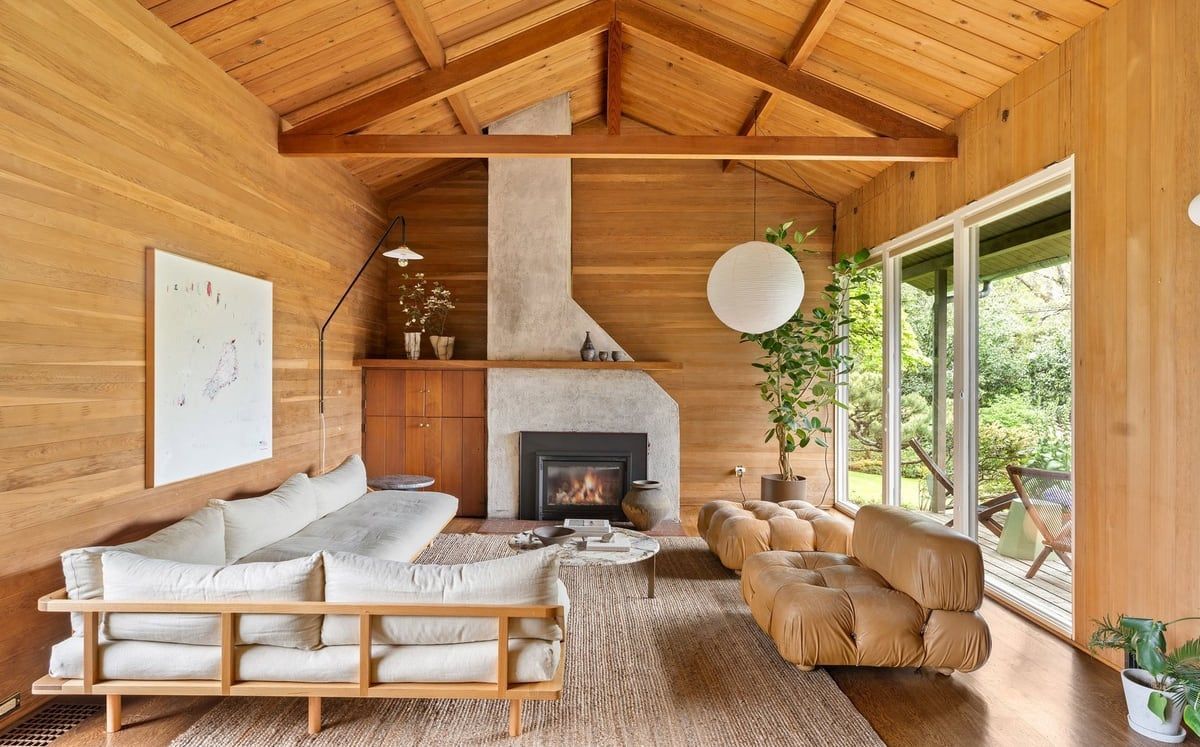
The Joss House: Eloquent Simplicity on a Portland Hillside
An Unlikely Beginning
Belluschi grew up in Ancona, Italy, and served in the Italian army during World War I, where he was honored for bravery. After the war, he earned a civil engineering degree from the University of Rome in 1922. The following year, he came to America to pursue graduate studies in engineering at Cornell. And he did all this despite the fact that he barely spoke English.
When he graduated from Cornell in 1925, his friends and family back home advised him not to return to Italy. Mussolini and the Fascists were consolidating power at the time so the prospects for an ambitious young man were not good. So Belluschi stayed in America, briefly working as a mining engineer in Idaho for five dollars a day before fate intervened and he received a letter of introduction to A.E. Doyle, Portland's premier architect at the time.
He was offered a job with A.E. Doyle's firm which he quickly accepted, moved to Portland and never looked back. Within three years he'd risen to become Doyle's chief designer. When Doyle died unexpectedly in 1928, Belluschi essentially ran the office, eventually taking over the firm entirely by 1943 and renaming it Pietro Belluschi, Architect.
The Frank Lloyd Wright Letter
Belluschi's first major commission almost didn't happen. In 1931, he proposed a radically modern design for the Portland Art Museum. His idea was a building that was stripped-down and severe, nothing like the ornate Beaux-Arts style that still dominated Portland architecture. This stark modern concept was so bold it alarmed the museum trustees who did not want to move forward with it.
Belluschi was determined, so in a brilliant move he sent his preliminary design to Frank Lloyd Wright. Wright was already the most famous architect in America in 1931. To his delight Wright wrote back with an endorsement: "My dear Belluschi, I think your plan simple and sensible and the exterior would mark an advance in culture for Portland."
That letter from Wright swayed the trustees. The Portland Art Museum was built as designed, becoming one of the first modernist museums in the United States, even predating New York's Museum of Modern Art building by eight years.
Inventing Northwest Modern
Through the 1930s and '40s, Belluschi developed what became known as Northwest Regional Modernism. Along with John Yeon (who influenced him significantly), Belluschi recognized that International Style modernism needed adaptation for the Pacific Northwest's specific conditions.
Flat roofs just don't make sense in rainy Oregon, and pure glass-and-steel construction felt cold and inappropriate for a region defined by forests. So Belluschi created a regional variant: pitched roofs to shed rain, extensive use of wood (especially Douglas fir), large overhangs for weather protection, and designs that integrated with their natural settings rather than imposing upon them. His residential work from this period showed how modern architecture could feel both international and local simultaneously.
The Sutor House (1937-38) particularly demonstrates Belluschi's merging of modern architecture with the Northwest climate and landscape. While designing it, he befriended
Jiro Harada, a Japanese professor visiting from Tokyo's Imperial Household Museum. Harada's influence shows throughout the Sutor House like in the basket-weave ceiling, the Japanese-style strolling garden and the careful attention to how interior and exterior spaces relate. Somehow it manages to look like a Northwest farmhouse, a modernist pavilion, and a Buddhist temple all in one. The
OpenSpace team did a terrific job highlighting all the Japanese influences in their video profile of the home below.
National Fame Arrives, so MIT Steals Him From Us
While Belluschi's residential work established him regionally, it was the Equitable Building (1944-47, now known as the Commonwealth Building) that made him a national figure. This twelve-story office tower in downtown Portland was revolutionary as the first fully air-conditioned, hermetically sealed office building in America. It was also the first building with a complete aluminum curtain wall facade.
In 1951, at the peak of his Portland success, Belluschi was offered the position of Dean of Architecture and Planning at MIT. It was too good to refuse. He sold his Portland practice to Skidmore, Owings & Merrill and moved to Cambridge where he served as dean until 1965. While serving as dean he still pursued projects as a design consultant, a role he pioneered. In that role he collaborated with major firms on high-profile buildings like the Juilliard School at Lincoln Center and the Pan Am building in Manhattan.
Belluschi received architecture's highest honors: the AIA Gold Medal in 1972 and the National Medal for the Arts in 1991. After retiring from MIT in 1965, he returned to Portland in 1973 with his second wife, Marjorie, buying and living in a house he'd designed decades earlier. He remained active as a consultant and advisor well into his eighties.
Belluschi (along with
John Yeon) essentially created the Northwest Regional Modern style that architects like
Saul Zaik,
William Fletcher, and
Van Evera Bailey would build upon. His impact lives on today all over Portland. Every time you see a mid-century modern home here with wood siding, a pitched roof, and large windows framing forest views, you're seeing Belluschi's influence.
