
John Yeon
The Visionary Who Defined Northwest Regional Modernism
by Brian Enright
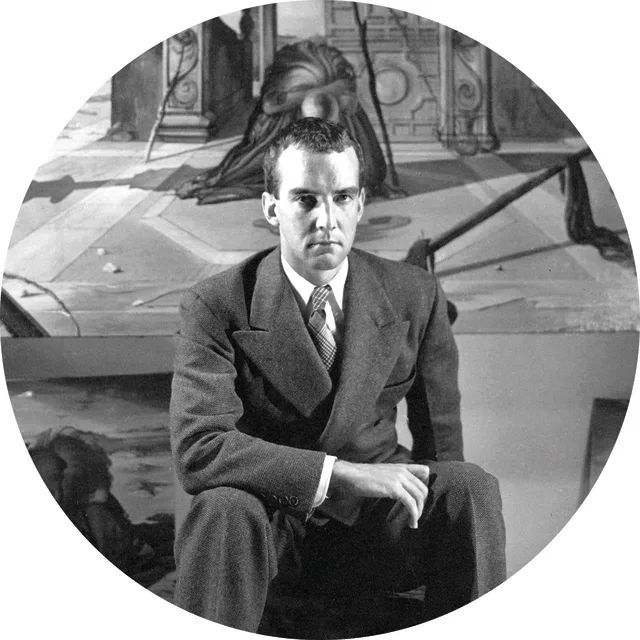
John Yeon was born in Portland on October 29, 1910, and died on March 13, 1994, leaving behind a legacy that continues to shape how we think about architecture in the Pacific NW. As hard as it is to believe, Yeon had no formal education in architecture. That makes his contributions to American modernism and Portland architecture even more remarkable.
Yeon was captivated with the idea of adapting the modern architecture he was seeing in California and New England for the Pacific Northwest. The Portland-born architect, considered a founding pioneer of Northwest Regional Modernism, created a new architectural language that spoke directly to the forests, landscapes and climate of the Pacific Northwest.
John Yeon Homes
There aren't many John Yeon homes here which is surprising given his impact on the region. But when we find one we'll profile it here.
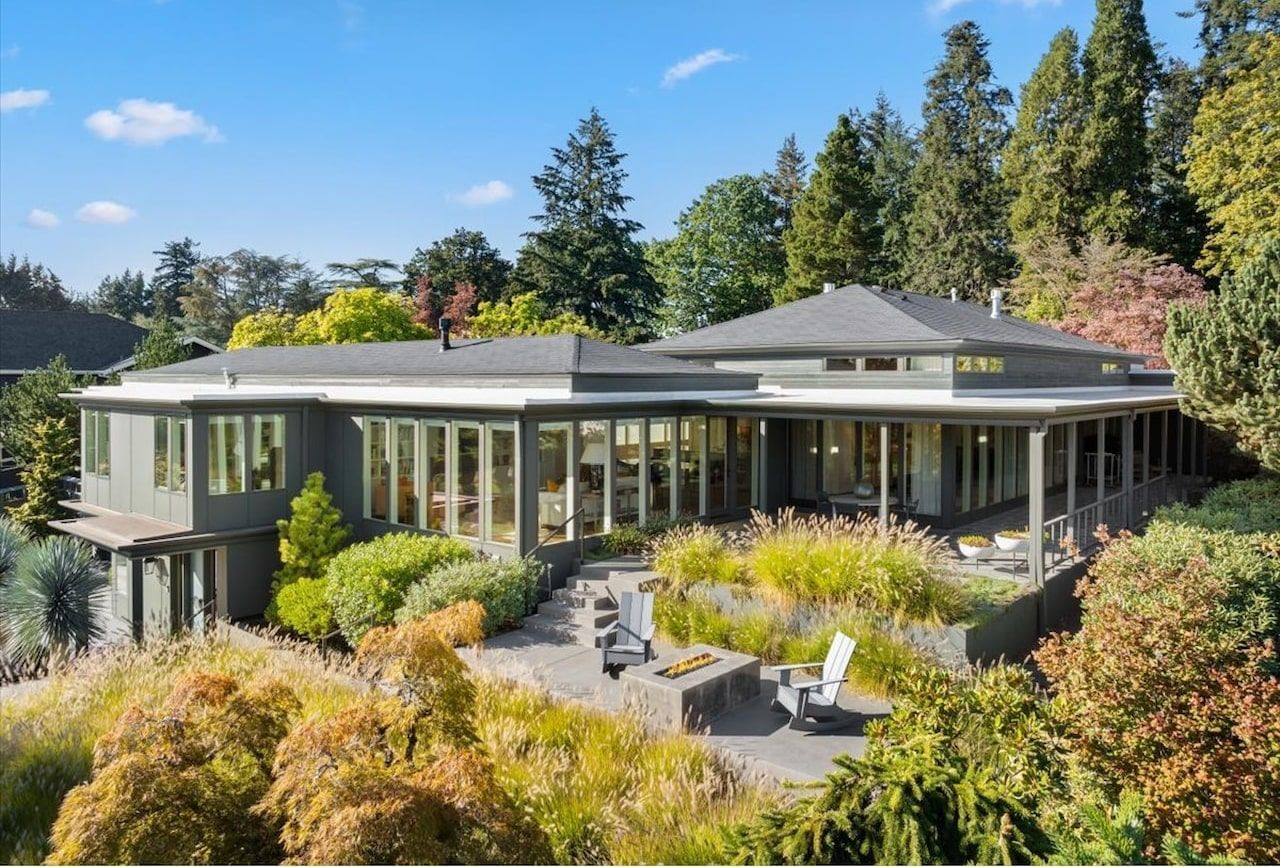
The Shaw House by John Yeon
An Unconventional Path
John Yeon's father was a lumber baron and construction manager who oversaw the building of the Columbia River Highway, which showed young John how humans could shape their landscape through thoughtful design. Fun fact: The 15-story Yeon Building on SW 5th is named after his father who had it built in 1911. At the time it was the tallest building in Oregon.
The young John Yeon also worked for A.E. Doyle, Portland's pre-eminent architect at the time. It's amazing how many prodigies become who they are because a spark was lit by early exposure to resources like this. Would Bill Gates have started Microsoft if his mom hadn't worked in the Stanford computer lab, giving him access to cutting edge technology at 13 years old? Hard to say.
Speaking of Stanford, John Yeon did spend a short time studying architecture there (and at Columbia University too), but he had to quit his studies in 1928 when his father died suddenly. His apprenticeships and brief stints in school were the extent of his formal training. But the fuse was lit for him to make an impact on the Portland area that would far outlive him.
The Watzek House Changed Everything
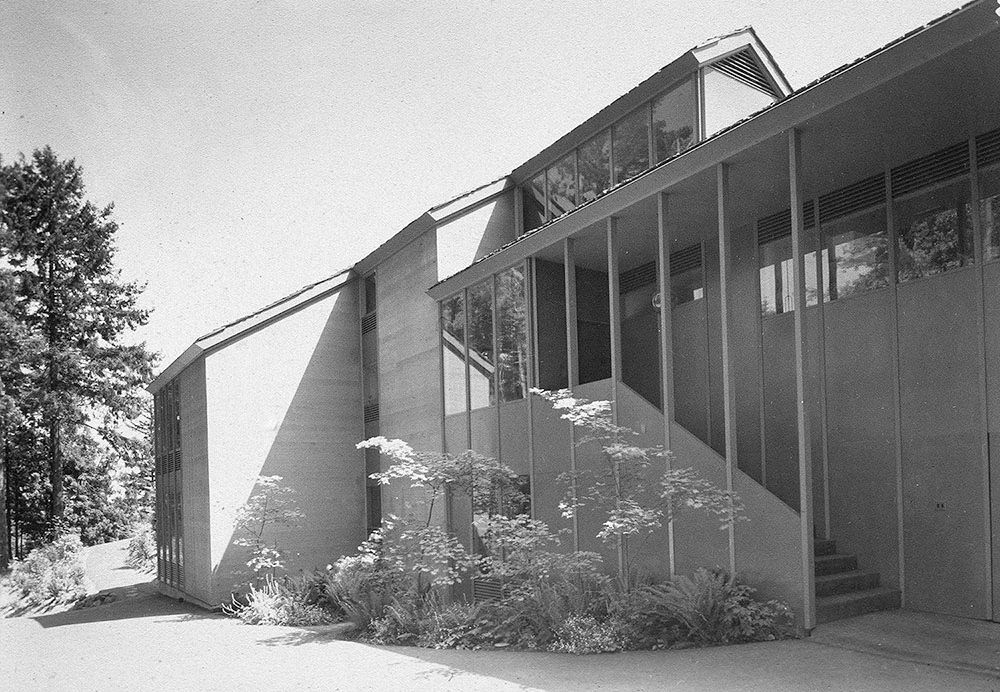
Yeon's first built project was the Watzek House, designed for his friend Aubrey R. Watzek, a Portland lumber magnate and fellow skiing enthusiast. Yeon's daring plan for a Modernist house in 1937 unnerved Watzek at first, but the completed design would become one of the most important houses in American modernism.
The house is located in the West Hills just outside of Downtown Portland and is built from local timber, laid out around a central courtyard. The techniques are reminiscent of traditional Japanese architecture, while remaining minimal. He incorporated cutting-edge advances at the time such as double-pane windows, a venting system, and hidden gutters and blinds throughout an open-concept floor plan. Thanks to the John Yeon center archives you can even see the original plans for the home.
Photographs of the house were shown at New York's Museum of Modern Art in 1938 and later featured in subsequent exhibitions and even a
MOMA book about American Architecture. The resulting U-shaped, wood-sided house "put John on the map," says Randy Gragg, executive director of the
John Yeon Center at the University of Oregon. The house is now listed on the National Register of Historic Places and
operates as a museum with tours.
A Philosophy of Place
What set Yeon apart was his profound understanding of what Northwest architecture should be. Architectural historian Meredith Clausen explained that Yeon saw Northwest architecture "not as a matter of local building materials or climatic conditions, factors he thought obvious, but as a deliberate aesthetic choice of forms sympathetic to the landscape, architectural forms that visually merged with the lines and planes of the natural terrain."
In his only formal lecture about his work, given at the University of Washington in May 1986, Yeon described his approach: "My own interest is very limited; it concerns deliberate aesthetic preference for forms sympathetic to various natural landscapes, or, in a high-flown phrase I used when I was young, 'architecture which translates the spirit of place into forms which are habitable.'"
This was a whole new way of thinking. Americans had been building homes that dominated the landscape, as if they were leaning into the idea of manifest destiny and the ability of humans to control everything. Yeon turned that on its head by creating buildings that felt like they belonged to the Pacific Northwest in their very bones. He built structures that enhanced rather than competed with the landscape.
Beyond the Watzek House
The Watzek House brought John Yeon national attention and credibility. Burt Smith was the contractor on the Watzek House, and he was so impressed that he hired Yeon to design some small houses that could be built on speculation, which became known as the "plywood houses." The idea was to bring modern efficiencies and architecture to the masses, much like Robert Rummer would do 20+ years later. Nine of these houses were constructed in Portland and nearby Lake Oswego at a fraction of the cost of the Watzek House. One of the best preserved plywood houses is located at 3922 North Lombard in North Portland.
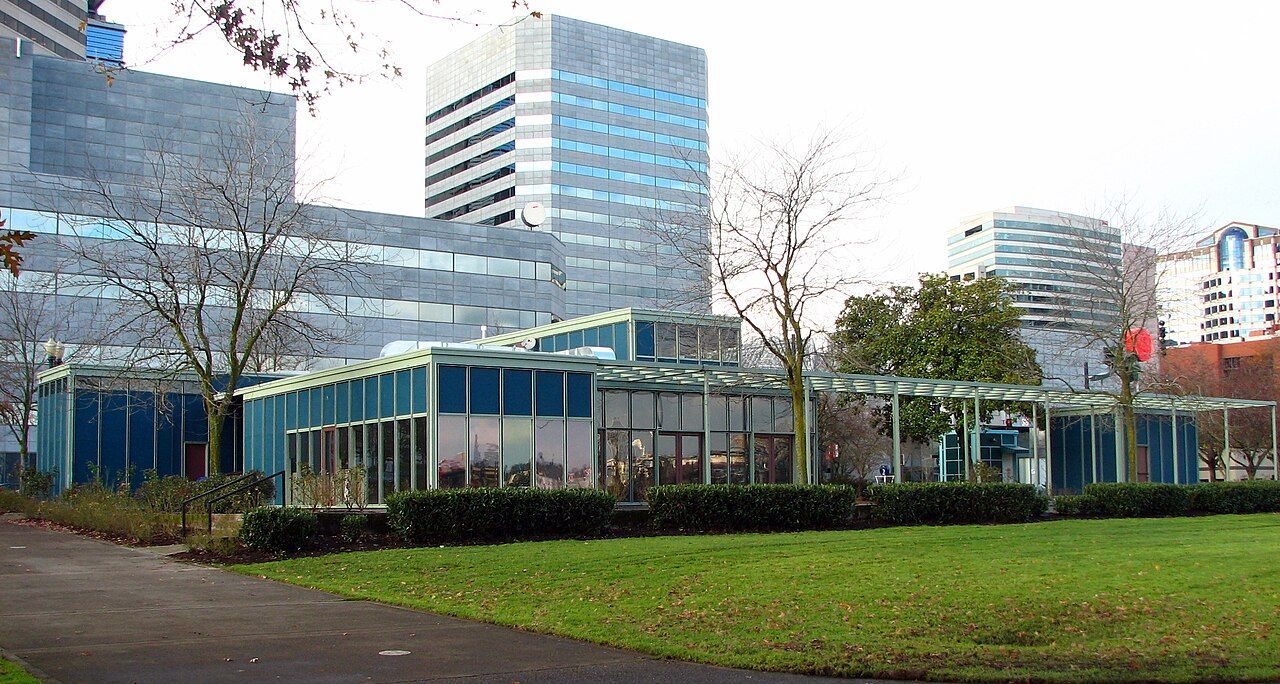
Other notable projects included the Cottrell House (1952), which sits across the street from the Watzek House, and the Portland Visitors Information Center (1948) which was his only public building. Yeon's only completed residence outside his native Oregon was the Vietor House in Indianola, California, that he built for an industrialist and his wife in 1941.
During his career he would design 65 houses and buildings, yet he saw only 18 completed. This had more to do with his notorious perfectionism and laboring over every detail than from lack of interest or opportunity. He once said of his design process: "I am not a broad-brush artist of large-scale effects. I niggle laboriously with small brushes over small details, like Vermeer or van Eyck."
Another factor was the pesky clients who often got in his way. “He would become really frustrated with clients, because many of them had different ideas for their houses,” says Randy Gragg, executive director of the Yeon Center. “It often came down to deciding either not to practice his craft and dealing with frustrations over not being able to make the designs he wanted to build. He was so meticulous that even when there were publications featuring his work, he would write them and argue with them about the photo selection and their design choices.” Oh my! We hope he's pleased with what we're putting together here about him, wherever he is.
Why John Yeon Still Matters Today
All this begs the question: Why are we still talking about an architect who only built 18 structures nearly 100 years ago in a city as big as Portland? Well, John Yeon's connection to the Pacific Northwest went far deeper than just architecture. He was quite the statesman and protector of the land. He walked the walk as someone who appreciated nature and wanted to complement it rather than bulldoze it.
At age 21 he was appointed by Governor Julius Meier to Oregon's first State Park Commission. A few years later he served as chair of the Columbia Gorge Committee of the National Resources Board. For more than six decades, he was a powerful advocate for landscape preservation, civic planning, and urban and rural parks, and was a lifelong, passionate voice calling for the preservation of the Columbia River Gorge.
When he was only 22, he borrowed money against a life insurance policy to purchase Chapman Point on the Oregon Coast. He kept that land for his entire life and never built anything on it, and to this day it remains one of the most photographed spots on the Oregon Coast. That 75-acre property in the Columbia River Gorge, known as The Shire, is now owned by the Yeon Center and serves as a model of landscape preservation.
Other than his preservation efforts, John Yeon was an enigmatic man when it came to his personal life. That could be attributed to his being gay and partnered with a longtime companion at a time when that wasn't exactly good for business in America, even in Portland. You can read more about Yeon and his partner, Richard Lewis Brown, as well as his conservation efforts in the Gorge in this wonderful OPB story.
That's why we still talk about John Yeon. His legacy isn't just about those 18 buildings he designed. It's about his deep love for the Pacific Northwest and the way an entire region learned to think about architecture's relationship to the landscape. Every time you see a contemporary Portland home that uses natural materials, frames views of the forest, or seems to grow organically from its site, you're seeing Yeon's influence at work. And that's the mark of a true visionary.
