
Marjorie Wintermute
Architect, Educator and Pioneer
by Brian Enright
In a profession that wasn't exactly rolling out the welcome mat for women in the 1940s, Marjorie Wintermute proved she could succeed and in doing so she helped redefine what it meant to be an architect in the Pacific Northwest.
Born in Great Falls, Montana on September 15, 1919, and passing away in Portland on September 21, 2007, Wintermute's five-decade career spanned groundbreaking residential design, transformative educational programs, and a commitment to making architecture accessible and understandable to children and adults alike.
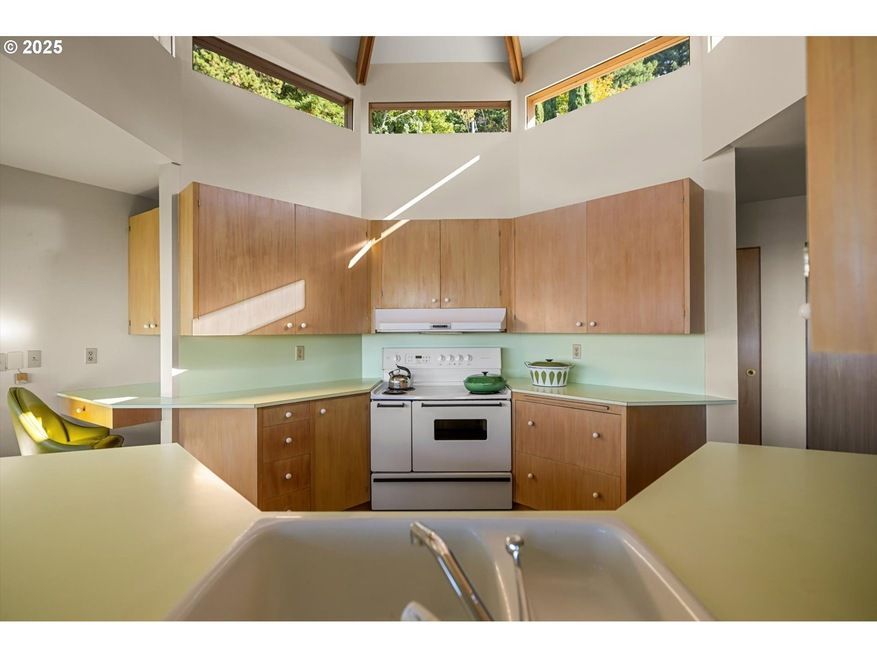
Curated Collection of Wintermute Homes
Marjorie Wintermute didn't build many Portland homes, but the ones she did build are iconic. When we find one we'll profile it here.
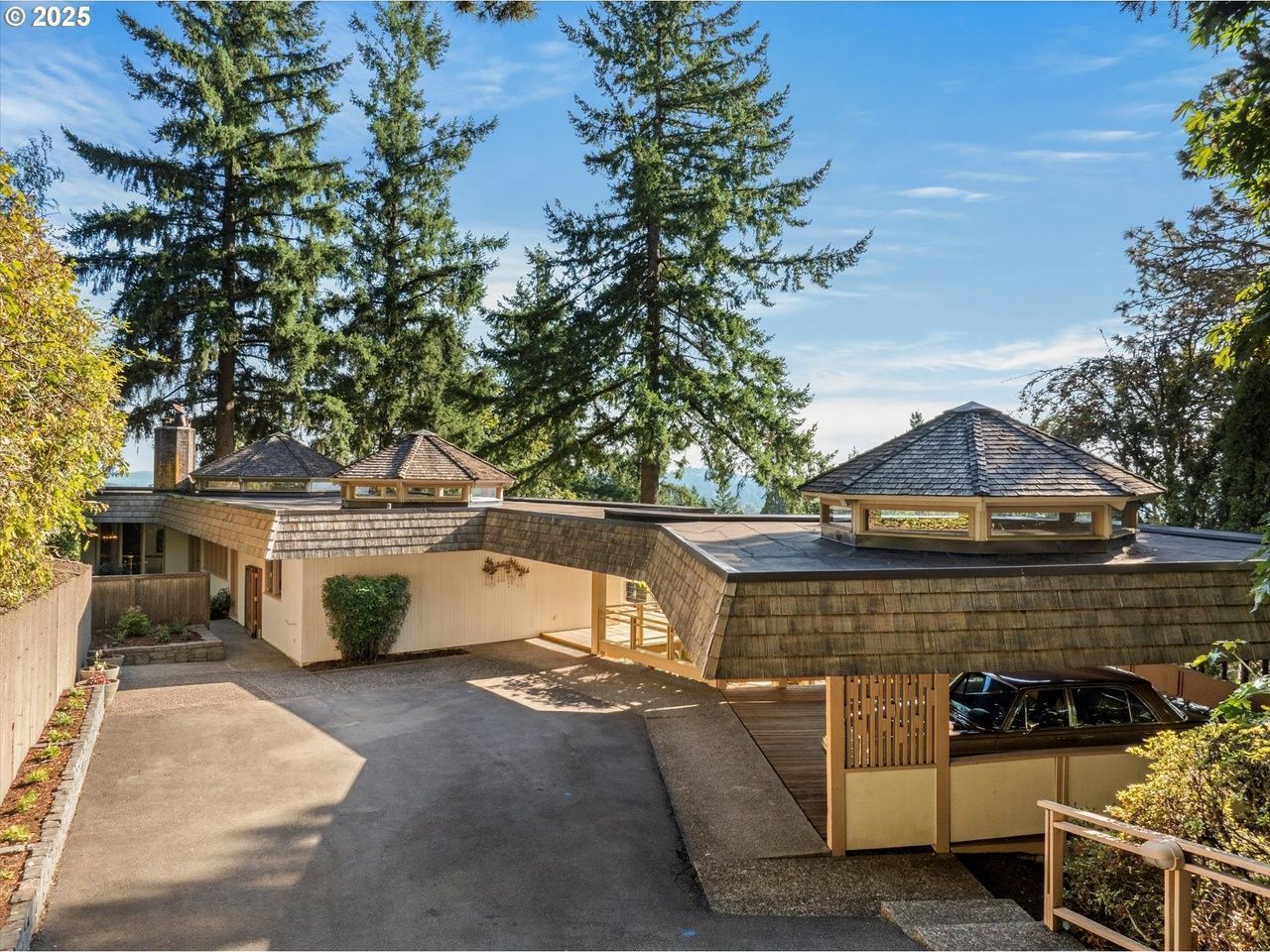
The Carousel House: Where Architecture, Landscape, and Legacy Converge
Breaking Ground Early & Often
Wintermute moved to Portland as a child and graduated from Grant High School at age 16. She enrolled at the University of Oregon, where she was among the first women admitted to the architecture program, earning a Bachelor of Arts degree in 1941.
Fresh out of college, she stepped into a profession and a country literally at war. During World War II, Wintermute worked in wartime drafting roles where she was the only woman in a drafting room of 175 men at the
Bonneville Power Administration in Portland, contributing to plans for hydroelectric dams. She also took on war contract jobs for the U.S. Air Force, Navy, and Standard Oil, including work on
blimp hangars in Tillamook, and city planning for workers in Saudi Arabia.
Learning From a Master
Following her graduation, she worked at the Bonneville Power Administration and then for Standard Oil in San Francisco as a drafter, after which she returned to Oregon to work for Pietro Belluschi's office in Portland. This apprenticeship with Belluschi from 1941 to 1947 gave her hands-on experience in modernist design principles under the influential architect known for his integration of regional materials and functional forms.
She received her architect's license in 1945, becoming
one of the earliest licensed female architects in Oregon. This was no small achievement in an era when architecture firms were "desperate enough to take a chance on a 'girl,'" as one later colleague wryly noted.
Building a Practice and a Family
Wintermute left Belluschi's office upon her marriage in 1947, and continued to work on residential projects from her home while raising her two children. She was definitely ahead of her time! She successfully maintained this solo firm for over two decades, focusing on residential commissions and small commercial buildings that exemplified Northwest contemporary style, a regional variant of mid-century modern design characterized by clean lines, integration with natural landscapes, and efficient use of materials.
This wasn't the typical path of a "successful" architect, and she had no big firm, no towering office buildings, and no signature public commissions dominating the skyline. But Wintermute WAS building a body of residential work that showed how modern design could respond sensitively to the Pacific Northwest landscape while serving real families' needs.
Her 1969 design of the Carousel House for the Wyse family exemplifies this approach. The home's three distinctive octagonal ceilings and Frank Lloyd Wright-inspired roofline, while very cool, weren't just architectural statements. They were thoughtful and calculated responses to the site, the client's needs, and even the neighbors' views.
Her Impact Grows
In 1970 Marjorie Wintermute became a principal at Architects Northwest. Over the next 15 years she held a variety of positions including architect-in-residence for the Washington County Education Service District, architect-in-residence for the Department of Defense Schools in Asia, and coordinator for the Oregon Arts Commission. That's an amazing pedigree, and I can only wonder about the awful things her male counterparts probably said and asked her at the time. Or maybe I've just watched Mad Men too many times. But I would bet she had to bite her tongue an awful lot.
While doing all this, she discovered a passion for architectural education. Inspired by the first Earth Day, a team led by Wintermute created the Architects in Schools program over a five-year period with the goal of developing awareness and understanding of the designed and built environment and our responsibility for it among third through fifth grade students.
The program, which continues today under the Architecture Foundation of Oregon, has introduced tens of thousands of Oregon children to architecture and design thinking. Wintermute's daughter, artist
Lynne Wintermute, recalls growing up "in a home filled with artists, architects and potters" and accompanying her mother on job sites. Eventually the mother and daughter team even led art and architecture tours to Europe together.
Pioneering Recognition and Legacy
Marjorie Wintermute's legacy isn't found in a single iconic building or a signature style that bears her name. Instead, it's woven through Portland's residential fabric in dozens of thoughtfully designed homes. It also lives on in the thousands of Oregon students who learned to see and understand the architecture all around them through her educational programs. It's carried forward by the generations of women architects who came after her, finding the profession slightly more welcoming because of pioneers like her.
She received several awards in her lifetime for her contribution to education and the profession, including the Gold Medal from the Heart Association, a Gulick Award, a Portland Historic Landmarks Commission Award, and the Oregon Governor's Award for the Arts. Most significantly, she became the first woman architect in Oregon to be granted Fellowship in the American Institute of Architects in 1979.
That Fellowship - the AIA's highest honor - recognized what Wintermute had been demonstrating throughout her career: that architecture could be practiced with integrity, sensitivity, and social purpose outside the traditional paths to professional success.
She practiced for over 50 years, balancing client projects with a commitment to sustainable, site-responsive designs. And remember, she was doing this long before "sustainability" became a buzzword. She proved that even in the 1950's and 60's you could be both a dedicated mother and a serious architect. She showed that architectural education could start in elementary school, and that residential design mattered as much as monumental public buildings.
She was an Oregon Pioneer in every sense of the word.
