
Robert Rummer
The Builder Who Brought Mid-Century Modern to Middle-Class Portland
by Brian Enright
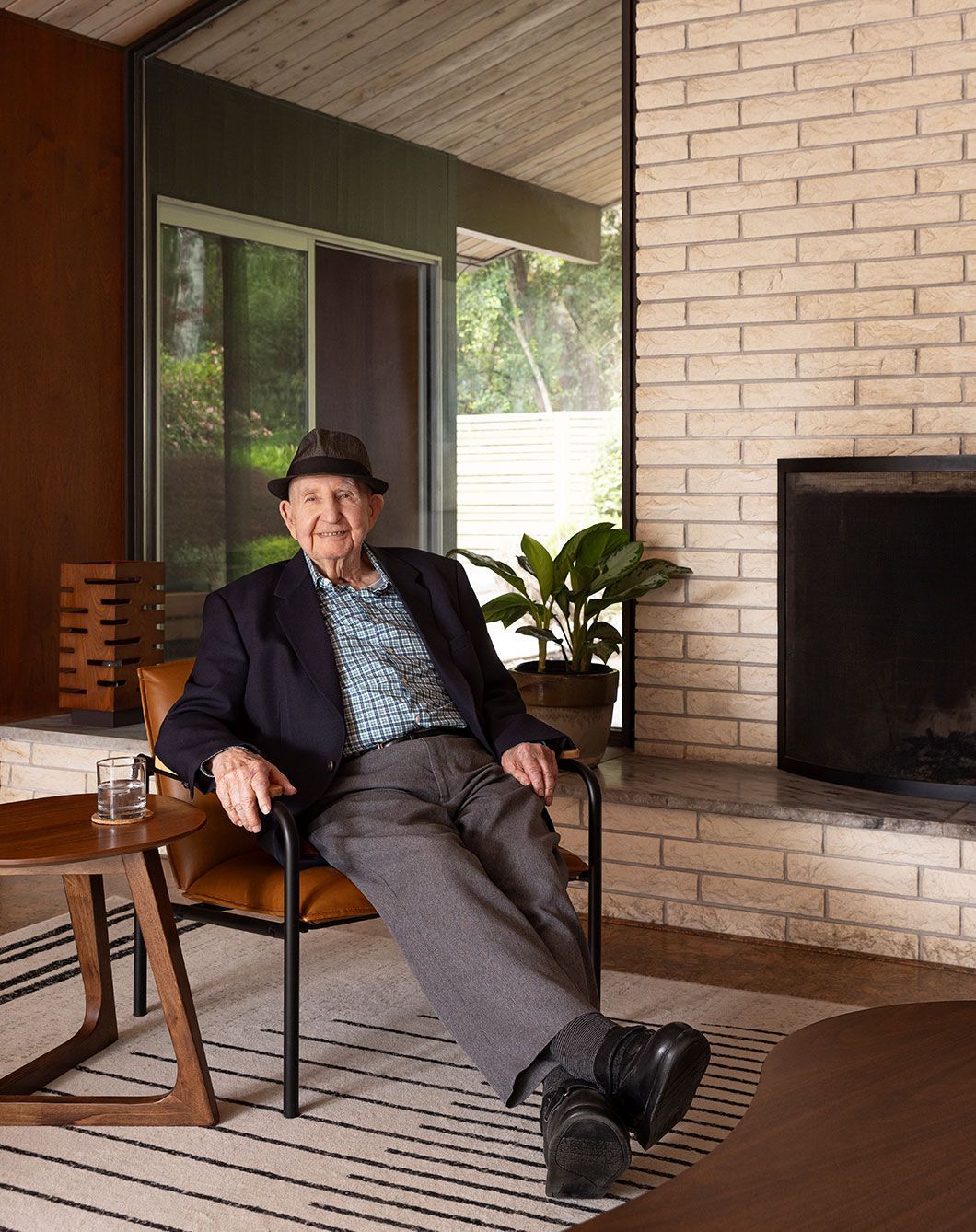
If you've driven past a Robert Rummer home here in Portland, you probably did a double-take at the striking facade. You know the elements - a single-story house with the distinctive peaked roof, walls of glass catching the light, and an openness that seems to invite the outdoors right into the living room. These homes, built throughout Portland's suburbs during the 1960s and 70s, have earned such a devoted following that they're simply known as "Rummers."
Robert "Bob" Rummer, who passed away on January 31, 2025, at the age of 97, left an extraordinary legacy across the Portland metro area. But his journey to becoming one of the Pacific Northwest's most celebrated builders started with something surprisingly simple: his wife's enthusiasm after a California vacation.
Read more.
Curated Collection of Portland Rummers
Whenever we see a Rummer for sale, or a profile of a Rummer home, we'll post about it here.
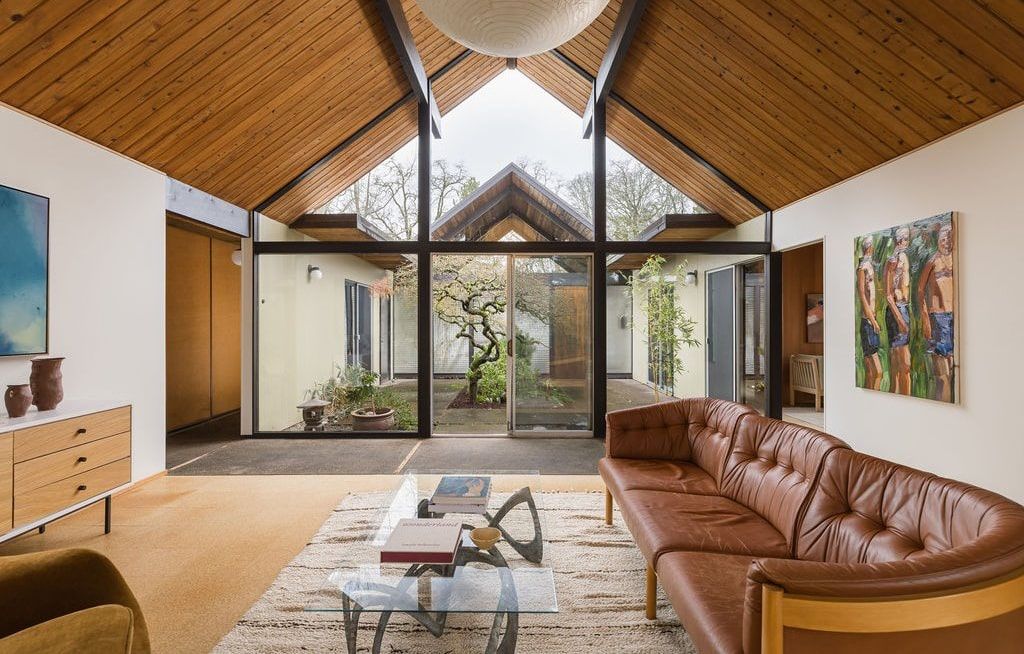
A Double-Gabled Rummer in Oak Hills
The Story Behind the Rummers
In 1959, Bob Rummer was a young businessman with a successful insurance company. He and his wife Phyllis had just built what they thought would be their forever home in Newberg. It wasn't modern but it was no slouch, and was even profiled in The Oregonian. But then Phyllis visited friend in California who lived in a Joseph Eichler-designed home and suddenly that forever home in Newberg didn't feel as forever as before. She returned home and told Bob she would happily trade their brand-new traditional dream home for a modern one.
Bob was skeptical at first. But after visiting a friend's Eichler-esque home with Phyllis, he was convinced and praised the practicality of the floor plan and the indoor-outdoor connections throughout the house. He was not an architect, but he as a businessman and saw the opportunity to bring these modern homes to Portland as a developer.
So in 1959, at age 32, Rummer launched Rummer Homes, Inc. and built his first development in Newberg the following year. According to Rummer himself, he and his wife had to "fight lenders to build houses" that bankers believed were "goofy and wouldn't sell." Typical beancounters with no vision! Well, Bob had a vision he believe in so much that he won them over and got that first development off the ground. They sold so well that he was able to prove the bankers wrong.
Bringing Eichler's Vision to the Pacific Northwest
Rummer's inspiration came directly from California developer Joseph Eichler, whose post-and-beam modern homes were revolutionizing suburban living around the Bay Area. In March of 1961, Rummer arranged a weekend meeting with architect A. Quincy Jones who was one of Eichler's key designers at the time. Jones showed him how a specific grid system of posts could support large panes of glass and create those signature open spaces.
But Rummer didn't just make carbon copies of Eichler homes. He took that California style and adapted it for Oregon's climate. While flat roofs may not have been the best design for the rainy Pacific Northwest, the light-filled atriums and walls of glass struck a chord with Portlanders who craved natural light during our long, gray winters.
What Defines a Rummer?
During a 2011 interview, Robert Rummer distilled his architectural vision into this phrase: "houses that bring the inside out or the outside in." The simplicity of the focus relative to the impact it would have on local real estate is profound. That philosophy manifested in distinctive features that Rummer home enthusiasts can spot from a block away:
- Central Atriums: Plans were often oriented around a sunlit atrium and courtyard element which was either enclosed or open air, with glass window walls throughout to bring nature to the interior of the home.
- Floor-to-Ceiling Glass: Massive windows that flooded interiors with natural light. This was wonderful in summer and crucial in our gray Pacific Northwest winters.
- Post-and-Beam Construction: The beams were originally painted in Rodda Paint's Oxford Brown, and they supported vaulted tongue-and-groove wood ceilings that created the dramatic interior volumes.
- Thoughtful Details: Focal roof-high chimneys, galley kitchens, Shoji sliding closet doors, and Roman baths were signature elements that elevated these tract homes beyond the ordinary ranch houses of the era.
- Radiant Floor Heating: This was genius. Back in 1961 they didn't have the kind of efficient windows we have now and the floor plans were very open with high ceilings. So keeping the home warm in the Oregon winter would've been a lot harder without radiant floor heating, and if word got out that his homes were too cold in the winter the whole movement may have never gotten off the ground here.
Building a Movement
From 1959 to 1975, Rummer's company built more than 750 mid-century modern-style homes in Portland, at the coast, and sprinkled throughout the Willamette Valley. He built hundreds of homes in Oregon and Washington, concentrating them in specific neighborhoods that became known for their modern sensibility.
The most well-known communities are Oak Hills and Garden Home, along with developments in Beaverton, Lake Oswego, Gresham, and Clackamas. In 2013 The National Register of Historic Places added Oak Hills and its 29 Rummer-designed homes to the Register in recognition of their architectural and cultural significance.
What made Rummer's achievement particularly remarkable was democratizing modern design. While architects like John Yeon and Pietro Belluschi were creating custom modern homes for wealthy clients, Rummer proved that middle-class families could live in thoughtfully designed modern spaces too.
The Rummer Legacy Today
Rummer homes are now sought-after and loved by Portland mid-century enthusiasts. There are many reasons why. The structural skeleton of a Rummer design required top-notch labor and materials; only grade-A timber could support such airy layouts. This exceptional construction allows Rummer homes to outlive their ranch counterparts. Many original features like mahogany paneling and built-in spice racks remain intact in well-preserved examples.
The homes' enduring appeal comes from their fundamental livability. They're perfect for entertaining, filled with natural light and offer a seamless connection to outdoor spaces. Since the pandemic we hear more and more that people want to entertain and host friends and revel in real life connections. Rummer homes are perfect for that, which makes them resonate just as strongly with today's buyers as they did in the 1960s. That's just another reason why these homes are so in demand.
If you're hunting for a Rummer home, focus your search on Portland's western suburbs. Beaverton's Oak Hills neighborhood, Garden Home, Raleigh Hills, and pockets of Lake Oswego contain concentrations of Rummers. You'll also find them in Gresham, Clackamas, and scattered throughout other outlying neighborhoods.
Organizations like Restore Oregon offer modernism tours that sometimes include Rummer homes, giving enthusiasts a chance to see both preserved and renovated examples. Some lucky attendees have even toured Robert and Phyllis Rummer's former personal residence, which retains many original features. And of course whenever we find a Rummer for sale we'll post about it here too.
For those of us who appreciate mid-century modern architecture, Rummer's legacy is everywhere in Portland. His homes proved that great design can be enjoyed by everyone and didn't require huge budgets or famous architects. And his legacy lives on at
Rummer Development where you can design and build your own Rummer. It's hard to believe this all started because Bob's wife happened to visit a friend in California who happened to live in an Eichler. What a wonderful legacy.
