
The 1969 Saltzman House by William Fletcher
6130 SW Thomas Street, Portland
A Modernist Masterwork in the Hills of Southwest Portland
Designed by architect William Fletcher and completed in 1969 for Portland businessman and art collector Harold Saltzman and his wife, Ruth, the huge 8-bedroom home sits calmly on 3.27 acres of flat gardens, wooded trails and a sloping hillside. It does not have to announce itself. It unfolds before you as you discover it.
8
Bedrooms
4/2
Bathrooms
1969
Year Built
William Fletcher
Developer
Northwest Contemporary, Mid-Century Modern
Style
Bridlemile
Neighborhood
Credit for All Photos: Chuck Schmidt
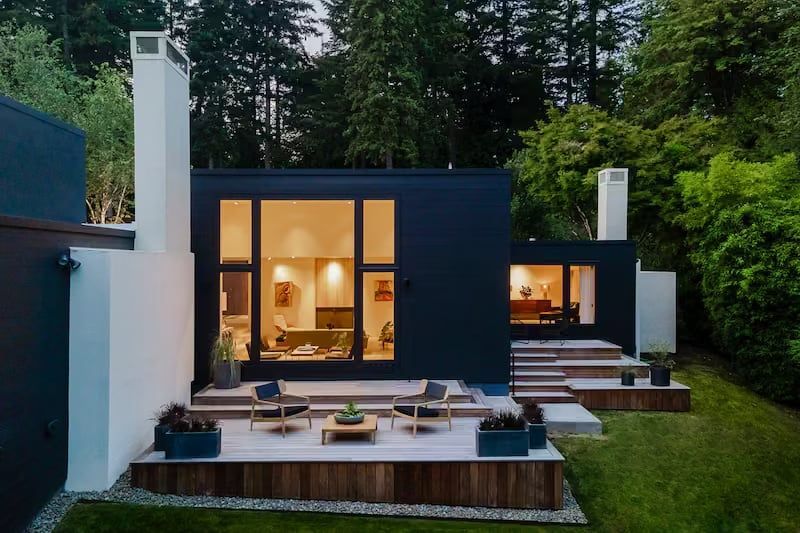
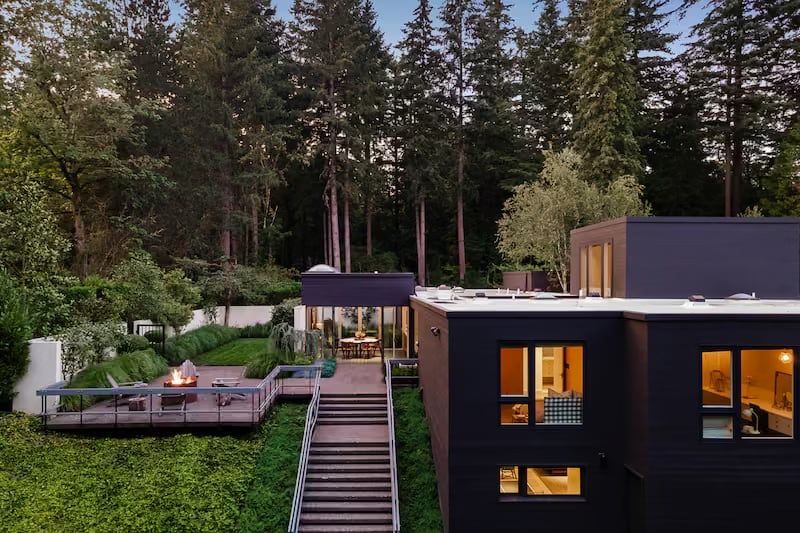
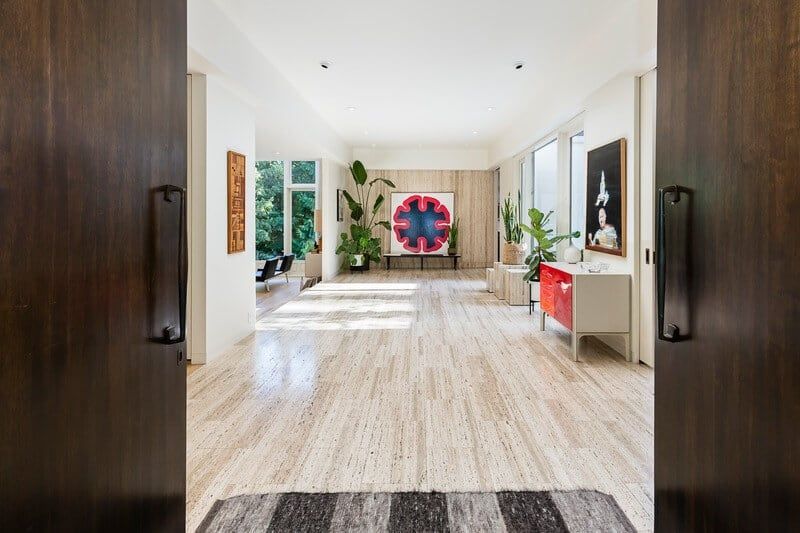
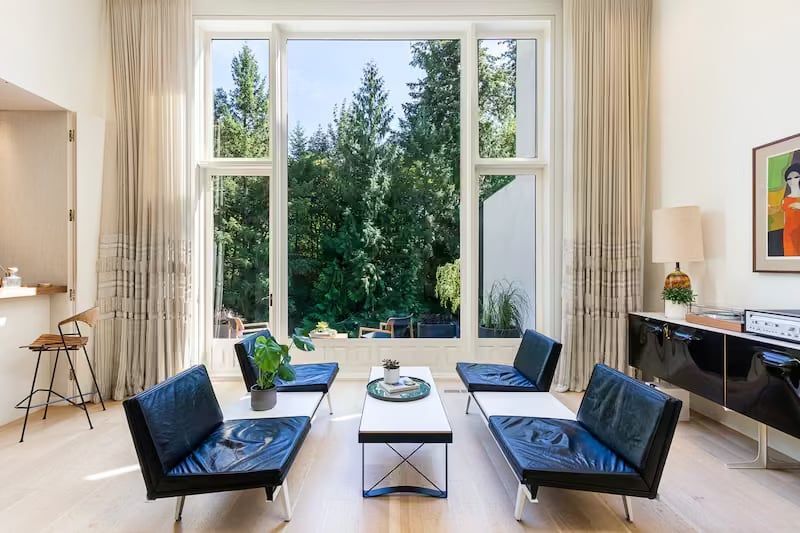
Fletcher was one of the foremost practitioners of what came to be known as Pacific Northwest Modernism, a regional dialect of the International Style that traded glass-and-steel abstraction for something warmer and more rooted. Where Mies van der Rohe , Fletcher's primary influence, sought to dissolve architecture into pure geometry, Fletcher and his contemporaries sought to dissolve the boundary between a building and its landscape. The Saltzman house may be one of his finest demonstrations of that idea.
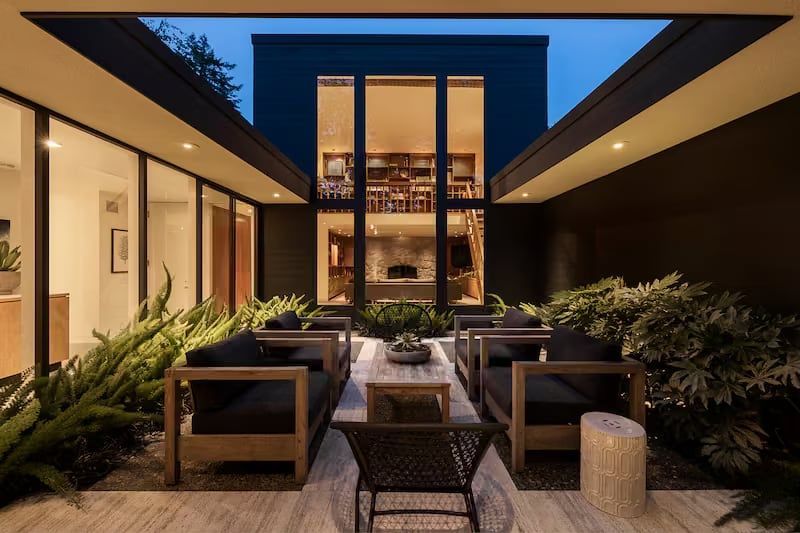
From the exterior, the house reads as a series of carefully considered cubes of varying dimension, their flat rooflines echoing the surrounding landscape. The layout is deliberate but never aggressive. Step through the custom entry doors and the impression shifts to something almost gallery-like, which is not surprising considering Saltzman was an avid art collector. A wide foyer paved in travertine sets the tone. Fletcher selected his materials with the same precision he brought to his siting: travertine, granite, walnut, and generous expanses of glass. These are not decorative choices so much as structural convictions, each surface lending the interior a sense of permanence and calm.
The main level opens into a sunken living room that looks out through walls of glass to an exterior deck, rolling green hills, and a dense curtain of forest. Three fireplaces are distributed throughout the home, their brick chimneys grounding the otherwise open plan. Who needs a 100-inch television when you have walls of windows oriented to take advantage of a view that changes with the weather and the hour?
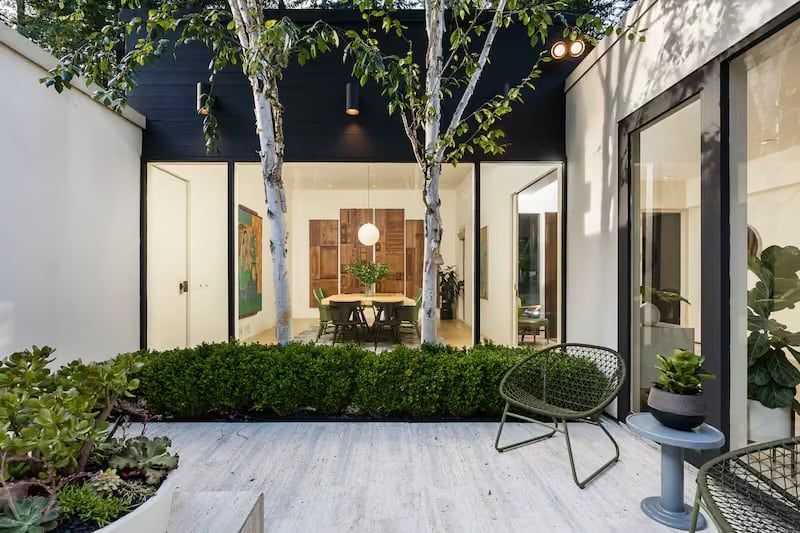
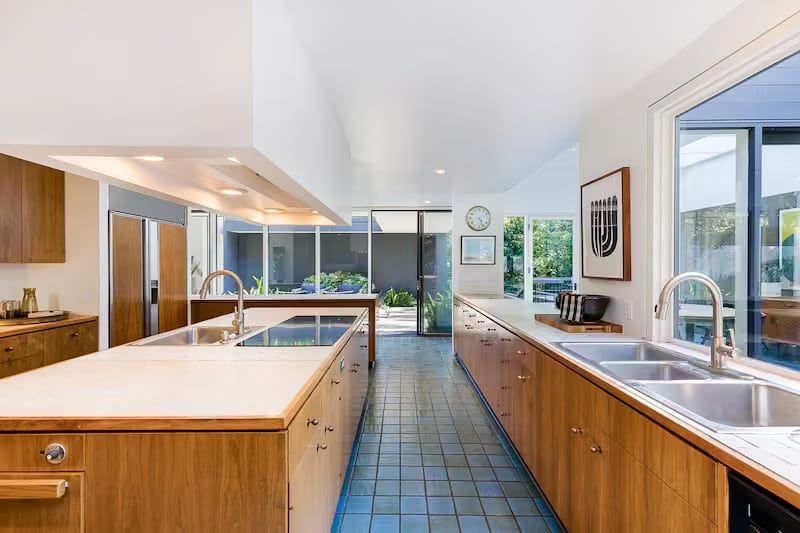
The home spans nearly 8,000 square feet of living space across a single story, with an additional 1,848 square feet of partially finished basement below. At its heart is a two-story library with a loft, a room that shows the Saltzmans' life was organized around books and art as much as around entertaining. Nearby, a large kitchen opens to an attached sunroom, flooding the space with the diffused Pacific Northwest light that Fletcher understood so well.
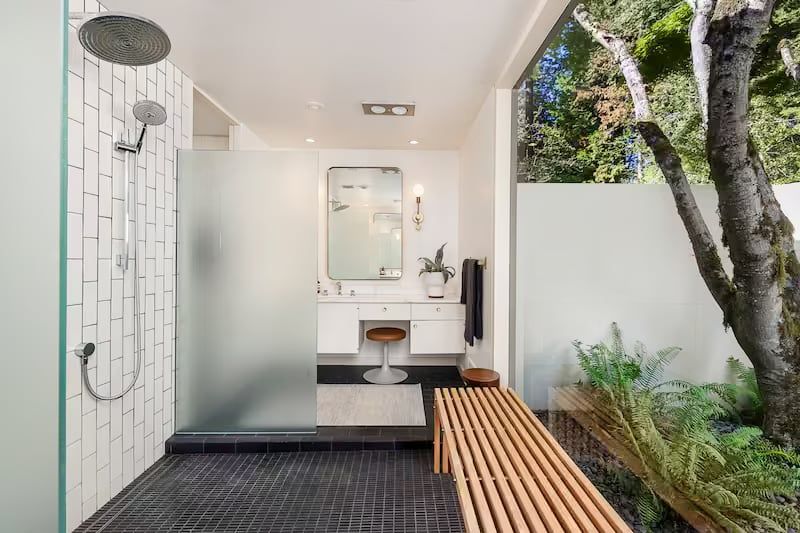
The master suite occupies its own wing of the main level, complete with a fireplace, a pair of closets, a walk-in shower, a bar, and a private deck. Seven additional bedrooms bring the total to eight, served by four full bathrooms and two half baths. The scale is generous but never ostentatious which is so Portland. Each room flows into the next with the openness that defined Fletcher's work.
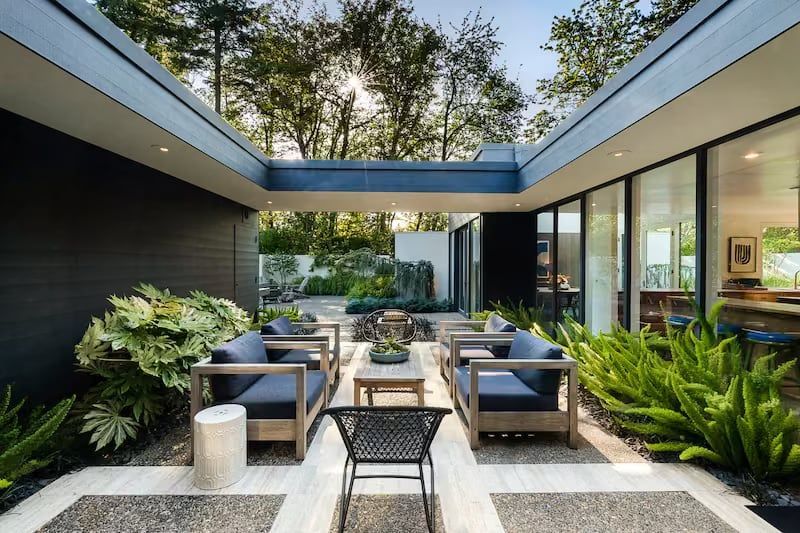
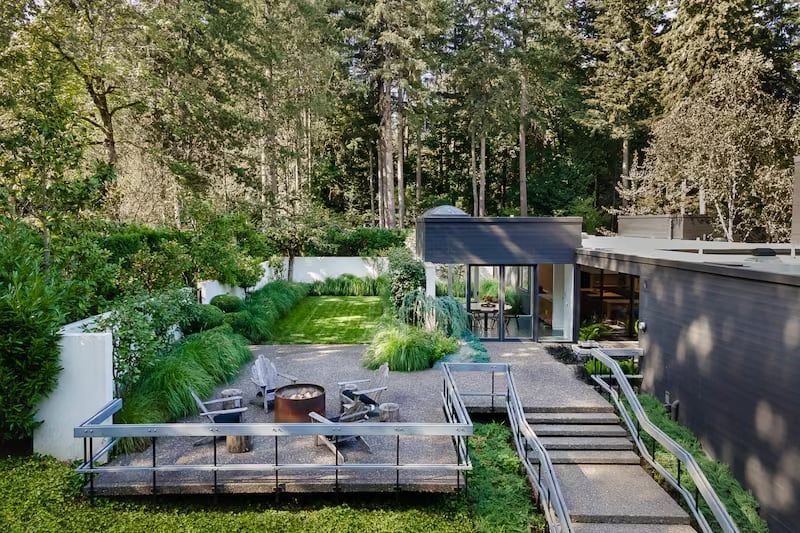
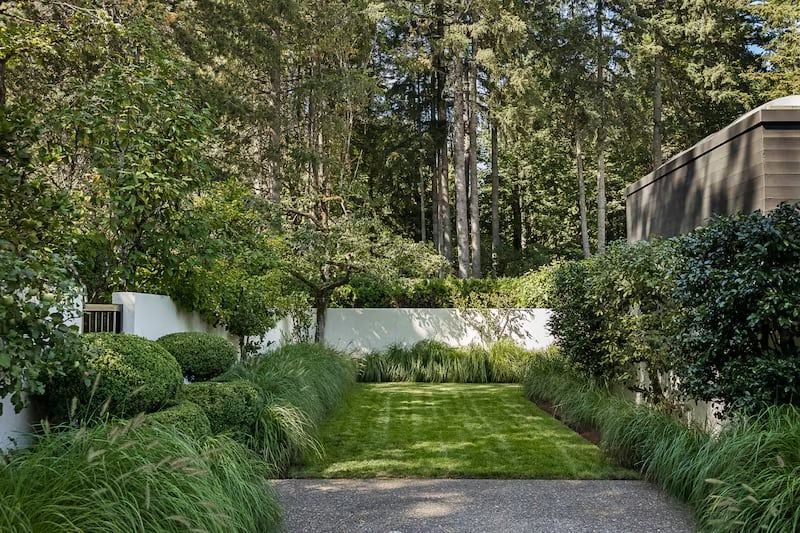
The grounds are as carefully considered as the architecture. Formal patios and gardens occupy the flat land surrounding the house, while stairs descend to a lower yard with a sports court. Private trails wind through the wooded acreage, eventually leading to a pond. An abundance of windows and doors blur the threshold between interior and exterior, a hallmark of Fletcher's philosophy that a house should exist in conversation with its site rather than in opposition to it.
William Fletcher came of age in the 1950s, graduating from the University of Oregon's School of Architecture and opening his first practice in the basement of his Portland home . At a time when most firms were producing houses in revival styles, Fletcher and a small group of like-minded architects were pushing in a different direction: pared-down dwellings wrapped in glass and native timber, designed to sit lightly on the land.
In 1956, Fletcher moved to a downtown studio and became the acknowledged leader of the so-called "14th Street Gang," a loose collective of architects that included Donald Blair, Saul Zaik , John Reese, Frank Blachly, Alex Pierce, and designer George Schwarz. Together, they helped define a regional modernism that was as much about respecting the gray skies and Douglas fir forests of the Pacific Northwest as it was about honoring the formal lessons of European modernism.
Fletcher later partnered with Curt Finch, then Dale Farr, and finally Hal Ayotte to form the firm now known as FFA Architecture and Interiors. Farr, who worked alongside Fletcher for years, has said of the Saltzman house: "Its clear and ordered plan and elevations give it a feeling of light and openness and connection to its site that is timeless. This is not a house that will ever look dated." We couldn’t agree more as it looks even more relevant and special in 2026.
