
The Zaik Residence: A Northwest Modern Landmark
720 NW Saint Helens Ave, Portland
Some houses are only designed by architects. This one was designed, lived in, and carefully stewarded by one of Oregon's most celebrated modernists for nearly sixty years. When Saul Zaik completed this house in 1961, he wasn't just creating a home for his family. He was building a laboratory for his ideas about how Northwest modern architecture could dissolve the boundaries between dwelling and forest.
4
Bedrooms
2
Bathrooms
1961
Year Built
Saul Zaik
Developer
Mid-Century Modern
Style
Forest Park
Neighborhood
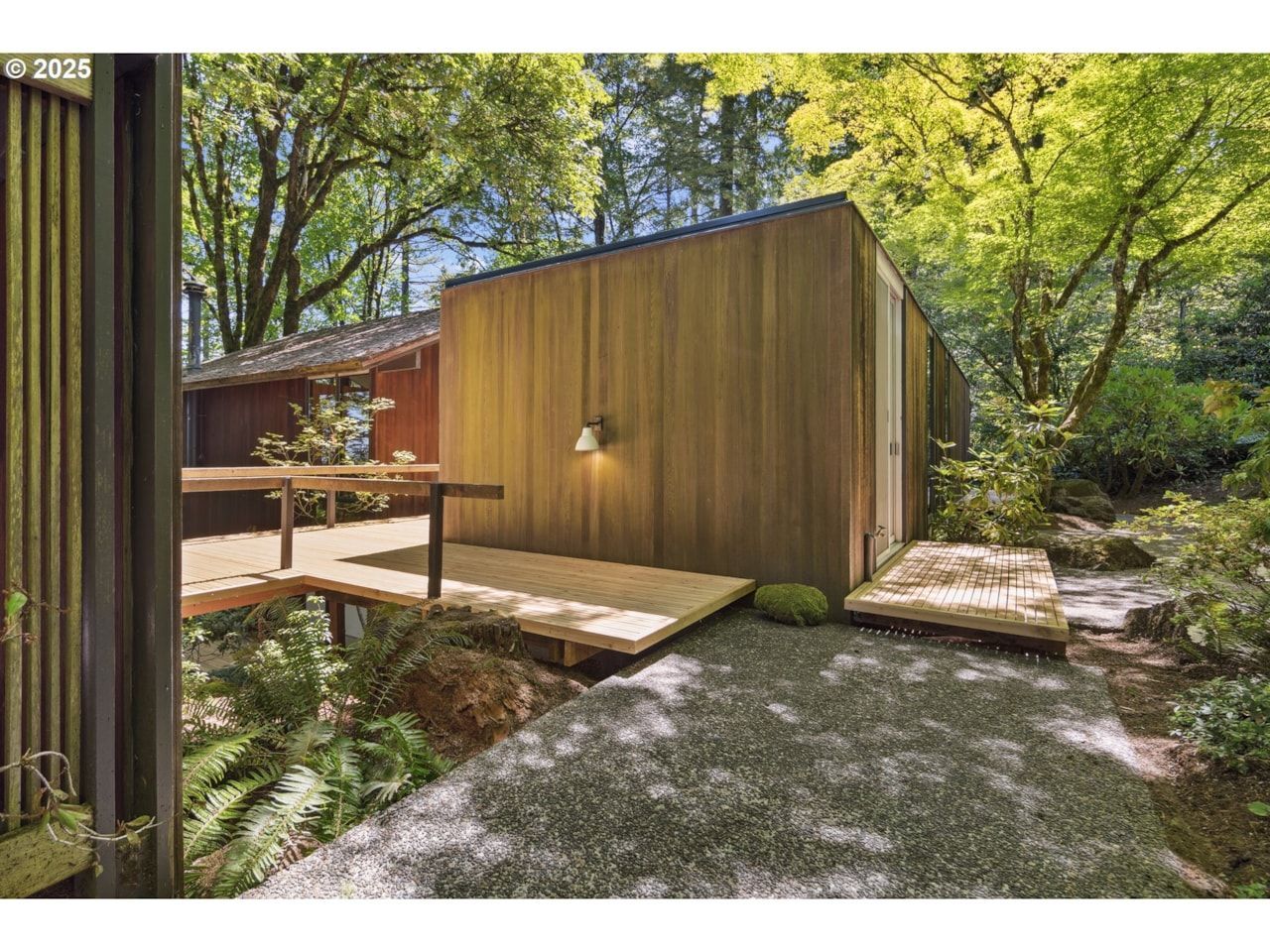
Nestled into a tree-filled hillside within walking distance of Forest Park, the house sits among mature Douglas firs and maples that have grown up around and, in some cases, within inches of the facade. The result is a dwelling that feels less like a house in the woods and more like an elegant treehouse.
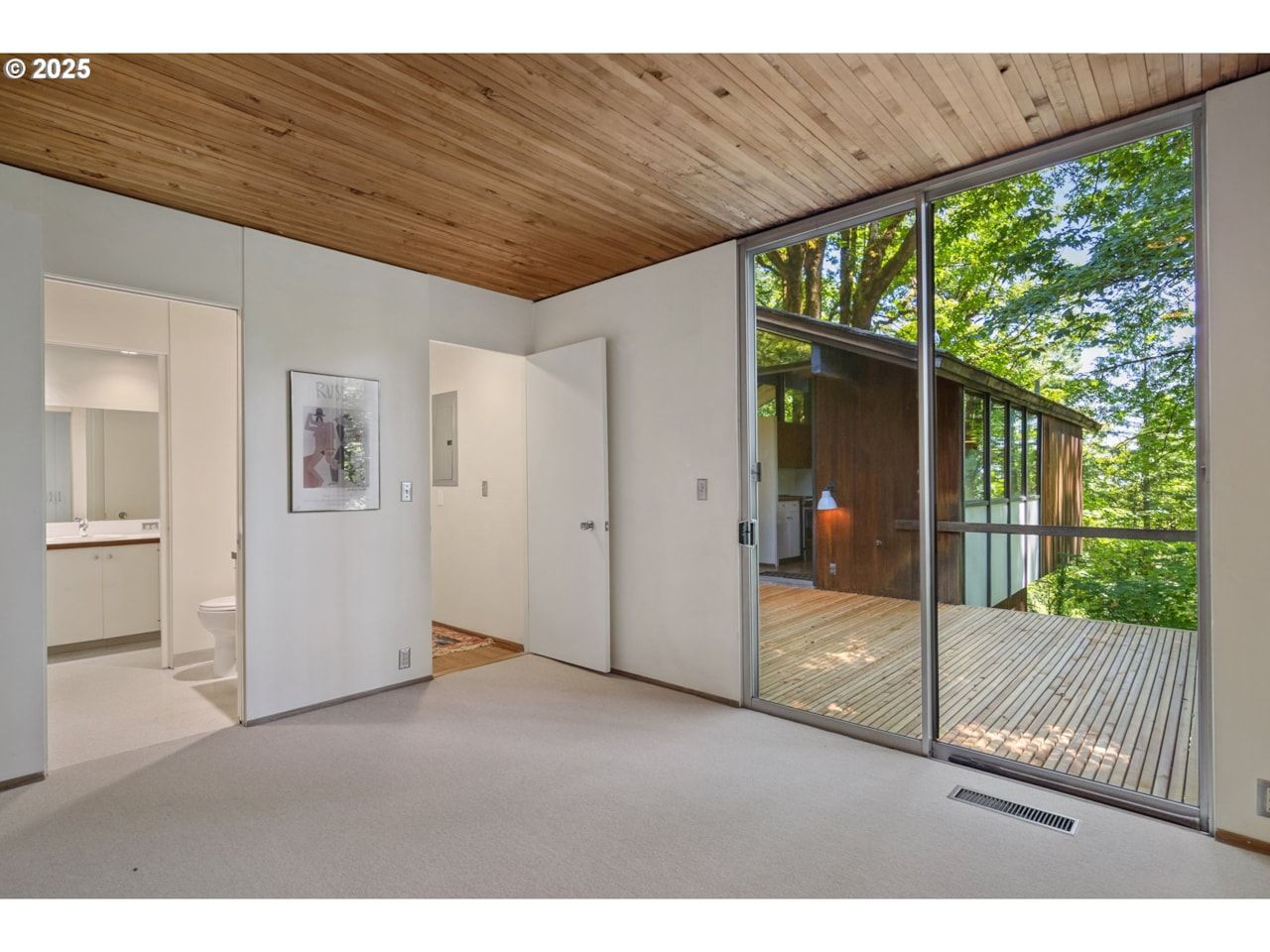
Zaik's approach divided the 2,009-square-foot residence into two distinct pavilions connected by a dramatic glass-walled entry accessed via a cantilevered deck. This separation creates a clear hierarchy between public and private while maintaining visual connections throughout. The flat-roofed bedroom wing houses two bedrooms and a bath, each opening onto an intimate hillside garden carved from the slope. Glass doors blur the line between interior and exterior, making the garden feel like an extension of the bedrooms.
The public wing takes a different approach entirely. Here, a soaring vaulted Douglas fir ceiling crowns the living spaces, which cantilever over the hillside to capture expansive views through a wall of glass. Below, two additional bedrooms share a second bath, each looking out at the forest through generous glazing.
Credit for All Photos: Portland Modern & RMLS
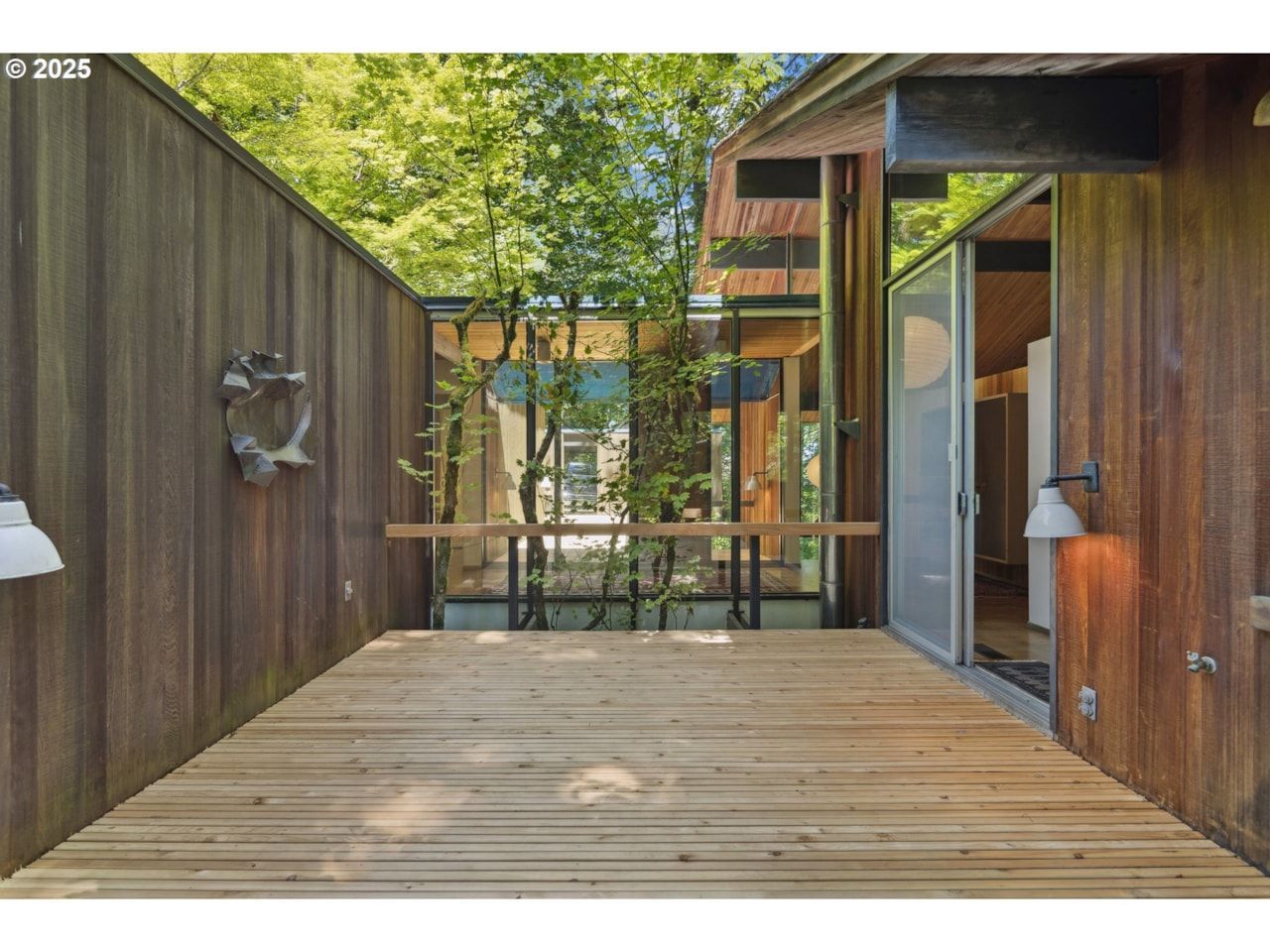
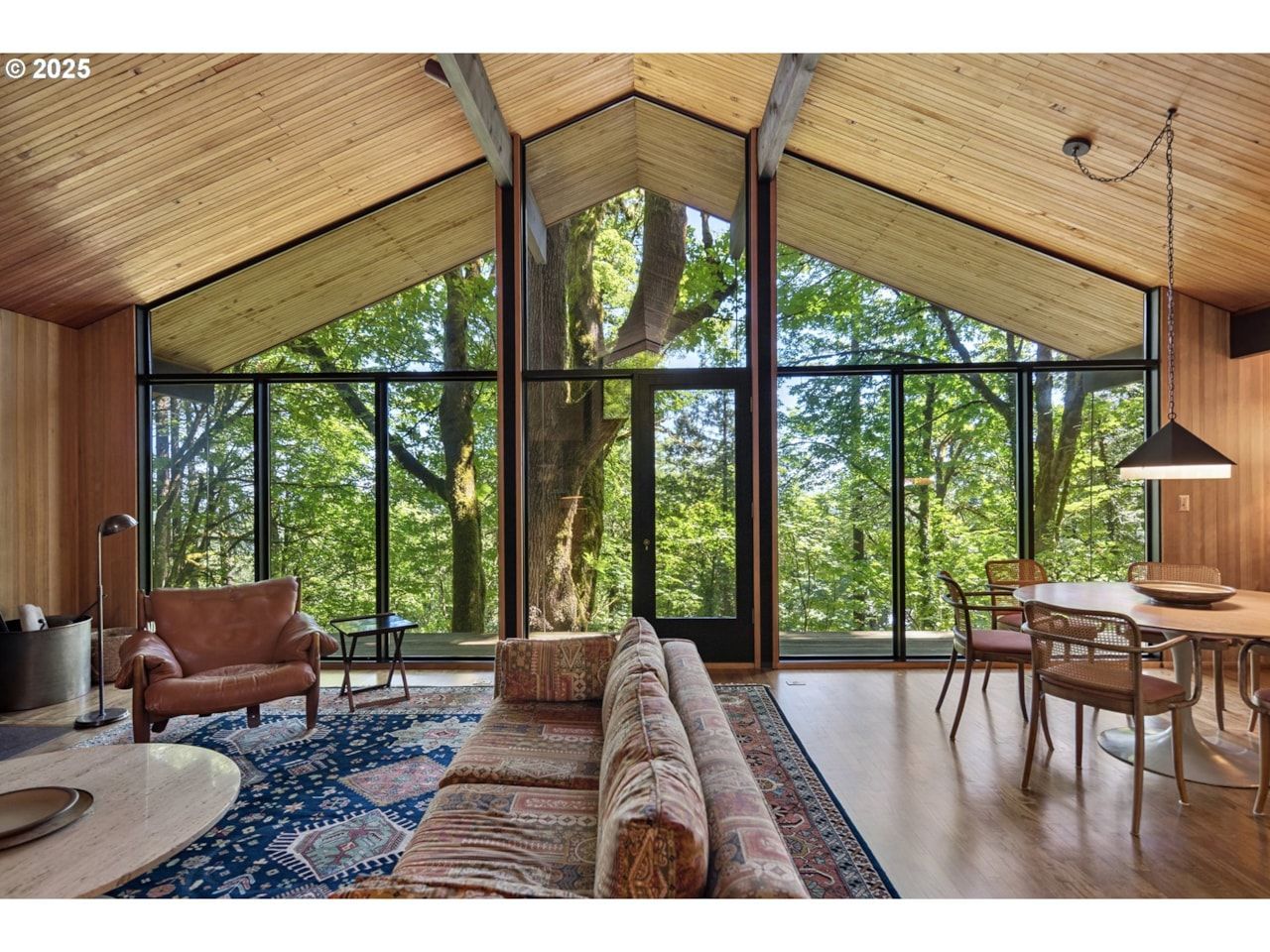
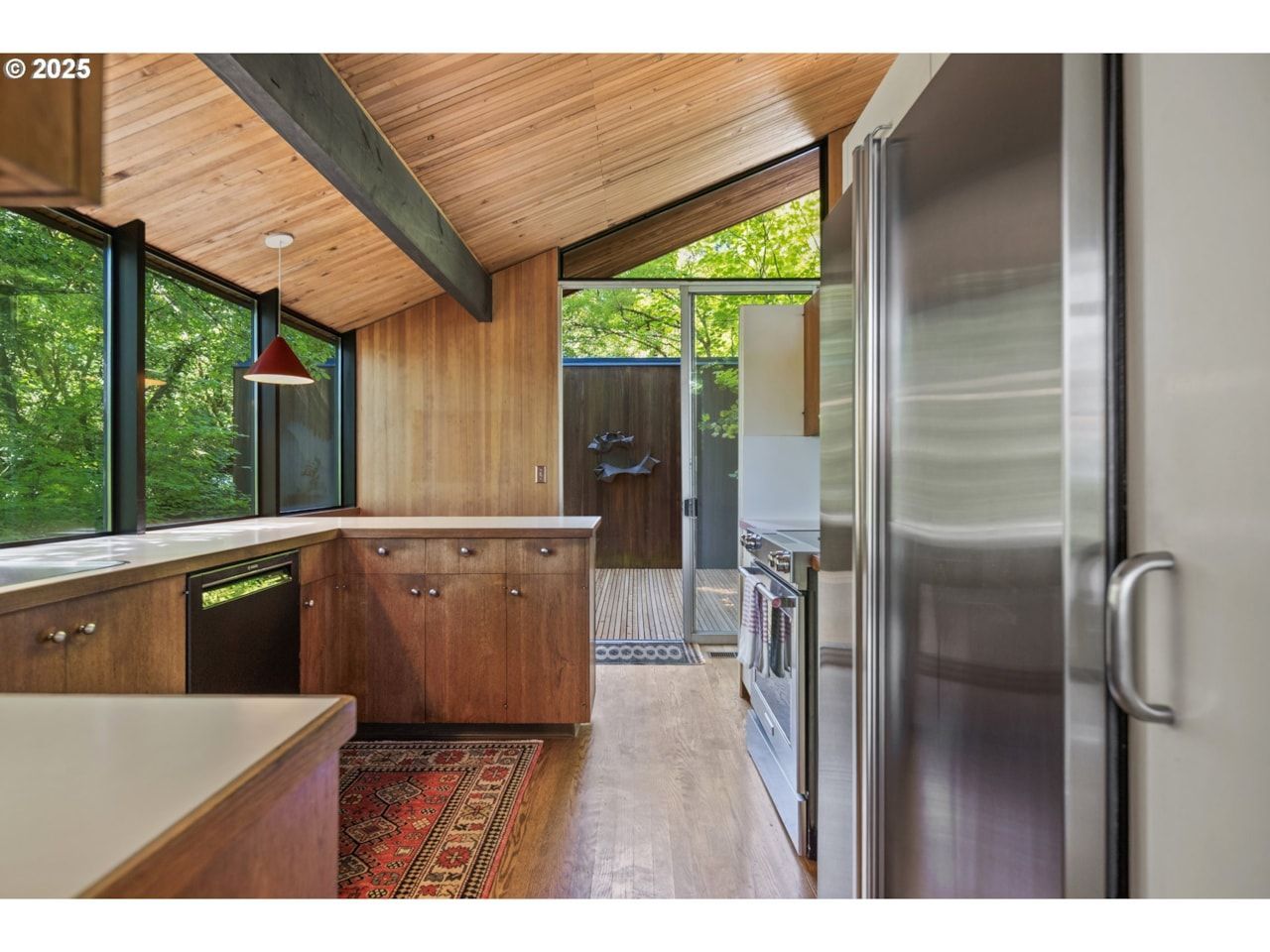
What makes the house remarkable isn't just its architectural strategy but how that strategy creates specific experiences throughout the day and year. Dappled sunlight filters through the forest canopy from every direction, creating ever-shifting patterns of light and shadow on the wood-clad interior surfaces. The proximity of mature trees means the house exists within the forest rather than simply adjacent to it - you're surrounded by bark, branches, and leaves at eye level from almost every room.
Multiple decks wrapping the two pavilions provide varied outdoor spaces for different times of day and different moods - some sheltered, some exposed, all intimately connected to the surrounding landscape.
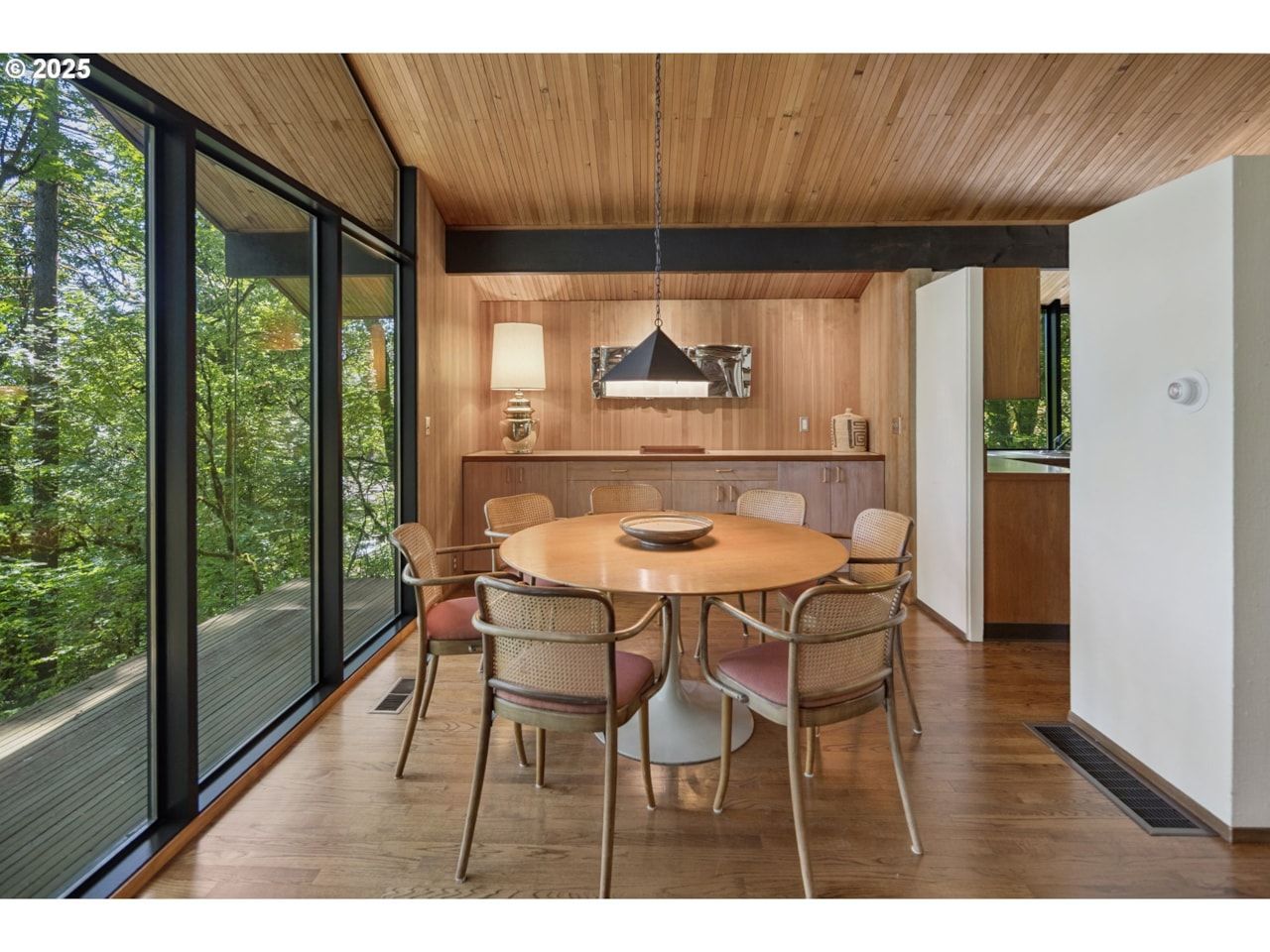
Saul Zaik's work has been featured in publications like Dwell, Sunset, and Architect, recognition of his role in defining what Northwest modern architecture could be. As one of the celebrated "14th Street Gang" of Portland architects like Bill Fletcher who emerged in the 1950s and '60s, Zaik helped establish a regional modernism that honored International Style principles while responding specifically to Oregon's forests, light, and topography.
Four bedrooms and two baths across two levels provide functional living space, but the house's real essence is about something else. It's about creating a contemplative relationship between the residents and the natural world just beyond (and sometimes inside) the glass.
This house was his own residence and represents his ideas in their purest form, uncompromised by client preferences or budget constraints. It's Zaik's vision fully realized and then carefully maintained through decades of living. The original design remains intact, offering insight into how one of the Northwest's most thoughtful architects chose to live.
